
Soft tree fern
Dicksonia antarctica
Description
Growing requirements
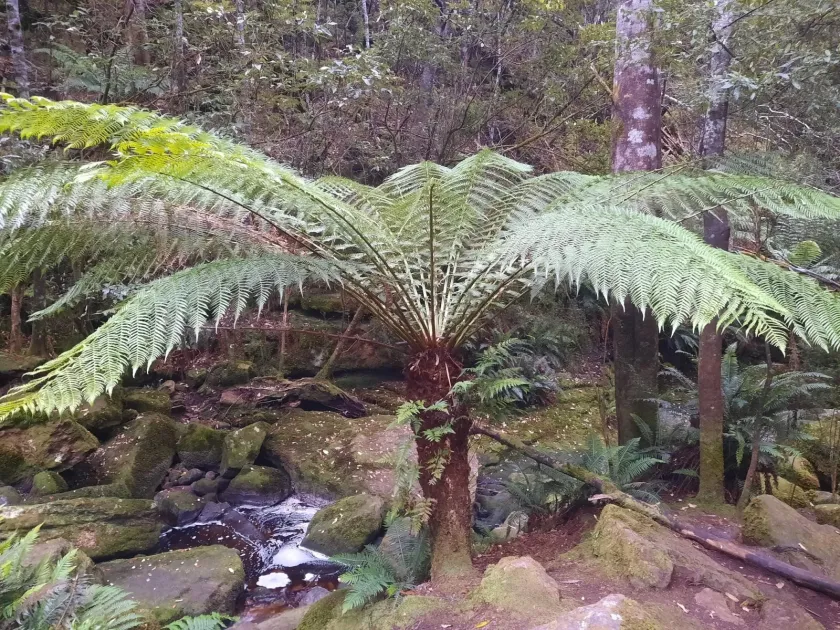
Dicksonia antarctica, commonly known as the soft tree fern, belongs to the Dicksoniaceae family. It is native to the wet forests of eastern Australia and Tasmania. This slow-growing fern is characterized by a tall, fibrous trunk that acts as a storage organ for moisture and nutrients.
The plant thrives in cool, humid environments with partial shade. In terms of soil, it requires a medium that is consistently moist, nutrient-rich, and well-draining, with a slightly acidic pH. Avoiding stagnant water is essential for the long-term health of the root system.
Climatic requirements are specific: the species prefers mild temperatures and high atmospheric humidity. While it can tolerate light frosts, temperatures consistently below -5°C can damage the crown and the fibrous trunk. Protection is mandatory in regions with harsh winters.
Horticulturally, this fern is a prized addition to ornamental gardens, shade borders, and conservatory landscapes. Its architectural silhouette makes it a focal point in subtropical-style landscaping, offering a unique aesthetic that mimics ancient, prehistoric forest ecosystems.
Maintenance includes frequent watering of the trunk itself, as the aerial root fibers are highly efficient at absorbing moisture. Applying balanced liquid fertilizers during the growing season helps support the development of the lush, spreading fronds that define its crown.
Main diseases and pests
The main threats to Dicksonia antarctica are root rot and crown rot, typically caused by poor drainage or overwatering during dormant periods. Ensuring the crown does not stay wet in low temperatures is vital to prevent fungal infections.
Common pests include mealybugs and spider mites, particularly when the ambient humidity is too low. Proper air circulation and maintaining high humidity levels are effective preventive measures against these infestations in a greenhouse or garden setting.