
Gray tansy-mustard
Descurainia incana
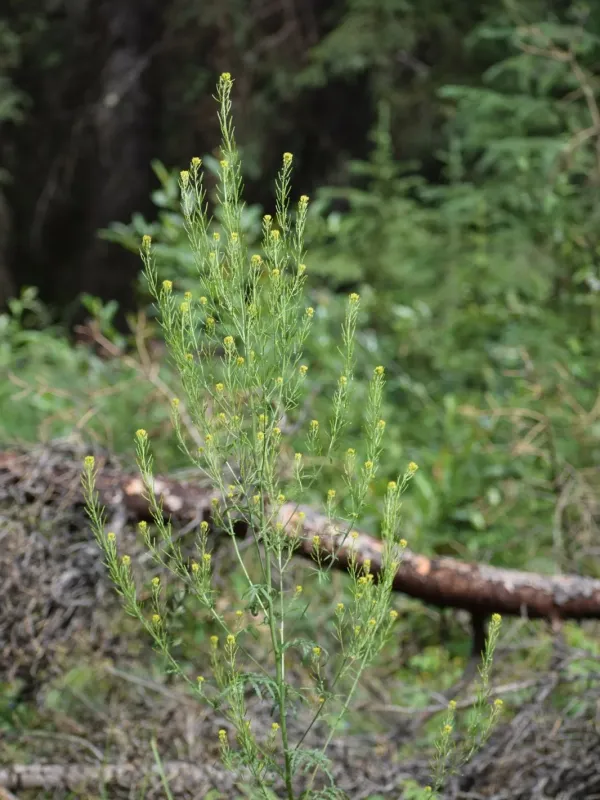
Description
Sowing dates
Descurainia incana is a perennial herbaceous plant belonging to the Brassicaceae family. In its natural habitat, seeds germinate after summer maturity; however, agricultural sowing requires careful planning to ensure maximum crop density and health.
The optimal time for sowing is during late autumn or early spring, as the seeds benefit from a period of cold stratification. This process breaks dormancy and ensures uniform germination when the ground warms up sufficiently.
Seeds are extremely small and should be sown at a shallow depth of approximately 0.5 to 1 centimeter. Proper seedbed preparation is vital to ensure that the soil is firm and fine-textured, facilitating good contact between the seeds and the moist soil surface.
The recommended seeding rate is typically between 4 to 6 kilograms per hectare, depending on local soil quality and intended use. Row sowing is preferred to allow better light penetration and air circulation, which reduces the risk of fungal diseases.
Post-sowing compaction using a roller is an essential step in the agricultural process. This practice preserves soil moisture near the surface, which is crucial for the delicate germination phase of this species.
Growing requirements
This crop thrives in well-drained soils, showing a preference for sandy or silty loam textures. It is relatively tolerant of various pH levels, though it performs best in neutral to slightly alkaline soil conditions.
Descurainia incana is a heliophilous plant, meaning it requires full exposure to sunlight for vigorous growth. Providing shade or excessive cloud cover will significantly reduce the accumulation of biomass and weaken the plant's structural integrity.
The species is highly noted for its cold hardiness, making it suitable for temperate and sub-arctic regions where many other forage crops might struggle. It survives winter well, provided the soil is not prone to deep, stagnant waterlogging.
Water requirements are moderate, as the plant possesses a resilient root system that accesses deeper soil moisture. Nevertheless, during the early growth stages, consistent soil moisture levels are necessary to avoid stunted development.
Regular maintenance includes inter-row cultivation to keep the area free from aggressive weeds. Weed management is particularly critical during the first few weeks, as the seedlings can be outcompeted by faster-growing invasive grasses.
Yield
The biomass yield of Descurainia incana is heavily influenced by soil fertility and the frequency of harvest. When managed under optimal conditions, it can provide a reliable source of green matter for livestock or other industrial applications.
Maximizing yield requires maintaining an optimal plant population density. Overcrowding can lead to resource competition, which in turn reduces the quality of individual plants and decreases the total forage yield per hectare.
The nutritional value of the crop peaks during the vegetative and early budding stages. Harvesting during this window provides the best quality forage, characterized by higher protein content and digestibility for livestock animals.
The application of phosphorus and nitrogen-based fertilizers has shown potential for increasing yield. However, excessive nitrogen should be avoided to prevent stem lodging and the accumulation of excess nitrates in the foliage.
As a crop with significant wild ancestry, Descurainia incana has a strong capacity for adaptation. Further improvements through selection and refined management could reveal even higher production potential across different agricultural zones.
Main diseases and pests
As a member of the Brassicaceae family, the crop is susceptible to diseases like powdery mildew and various types of rusts. These pathogens are most prevalent in humid environments with low air circulation between the plants.
Crucifer flea beetles are the most significant pest threat, especially during the early seedling stage. These insects can quickly defoliate young plants, leading to complete crop failure if left unmanaged during the initial spring growth.
Aphids and certain types of weevils can also infest the plants during the flowering stage. These pests weaken the plant by feeding on sap and can cause significant damage to seed development, reducing the potential for future reseeding.
Effective management includes integrated pest management (IPM) techniques, such as proper crop rotation and the strategic use of biological control agents to mitigate pest pressure without relying solely on chemical pesticides.
Avoiding continuous monoculture is crucial. By rotating this crop with non-brassicaceous plants, farmers can significantly break the life cycles of common pests and pathogens, maintaining the soil's long-term health.
Harvesting
For high-quality forage, the harvest should occur during the pre-flowering or early flowering stage. At this point, the plants contain the ideal concentration of nutrients before energy is diverted into reproductive processes like seed formation.
Mechanical harvesting with a standard mower is efficient for large-scale operations. A cutting height of approximately 5–7 centimeters is recommended to preserve the basal nodes, allowing the plant to potentially regrow for subsequent cuttings.
When harvesting for seeds, farmers must monitor the crop closely as the pods turn color. Because the pods are prone to shattering, timing is critical to prevent significant seed loss on the field during the harvesting process.
Post-harvest handling requires quick drying of the green material in a well-ventilated area. Improper drying can lead to mold development or heat damage, both of which severely degrade the quality of the harvested produce.
Finally, cleaned and dried seeds should be stored in cool, low-humidity conditions. Proper storage prevents germination loss and maintains high viability, ensuring that the seed material remains suitable for sowing in the following seasons.