
Descurainia bourgaeana
Descurainia bourgaeana
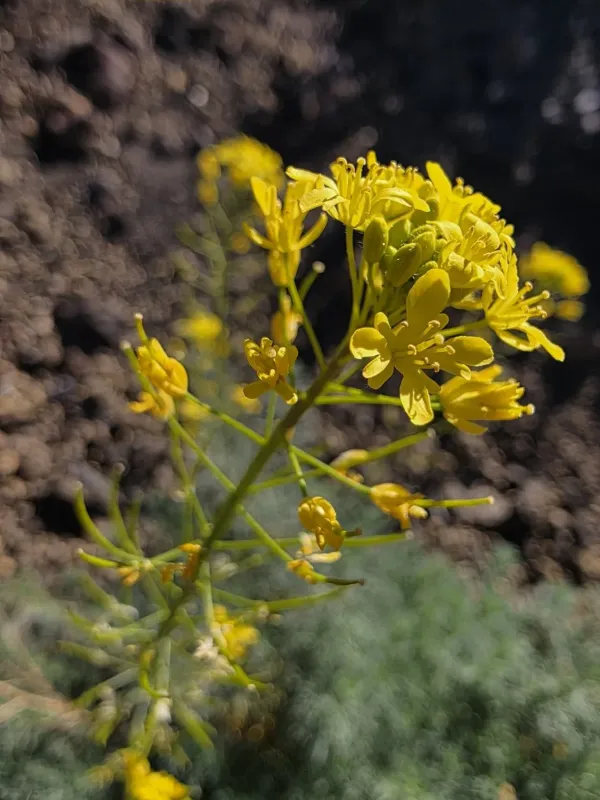
Description
Growing requirements
Descurainia bourgaeana is a notable species within the Brassicaceae family, recognized for its adaptation to the unique high-altitude environments of the Canary Islands, specifically on the island of Tenerife. It typically thrives in volcanic substrates found in subalpine zones.
The botanical structure of this species includes a robust rosette of leaves and distinctive, elongated inflorescences. Its leaves are pinnately divided, a common trait in this family, which helps the plant manage gas exchange and transpiration in dry mountain air.
Regarding climatic requirements, this plant is conditioned to survive extreme thermal fluctuations between day and night. It prefers well-drained, porous soils typical of volcanic slopes, avoiding any conditions that cause waterlogging around the root zone.
Agricultural and scientific interest in this species lies in its extreme specialization. Unlike standard crops, its management requires mimicking its natural volcanic habitat, ensuring high light intensity and proper thermal cycles to encourage growth.
In terms of ecological importance, Descurainia bourgaeana serves as an indicator of the health of high-altitude ecosystems. Protecting its habitat is essential for maintaining the botanical diversity of the Macaronesian region.
Main diseases and pests
Like many mountain endemics, Descurainia bourgaeana faces significant risks from climate change, which threatens to alter the specialized niches it occupies in high-altitude zones.
Insects that target cruciferous plants, such as aphids and various larvae of the order Lepidoptera, can cause damage to the foliage and affect the plant's ability to produce seeds effectively.
Pathogenic fungi pose a risk when the plant is grown outside its natural range, especially in environments where humidity levels are higher than what the plant is evolutionary prepared for.
Competition from invasive species can deplete the limited nutrient availability in the thin, rocky soils that the plant relies on, leading to stunted growth or decline in local populations.
Physical habitat degradation due to soil erosion or human activities at high altitudes can severely impact the survival rate of seedlings and the long-term stability of this rare species.