
Japanese dendranthema
Dendranthema japonicum
Description
Growing requirements
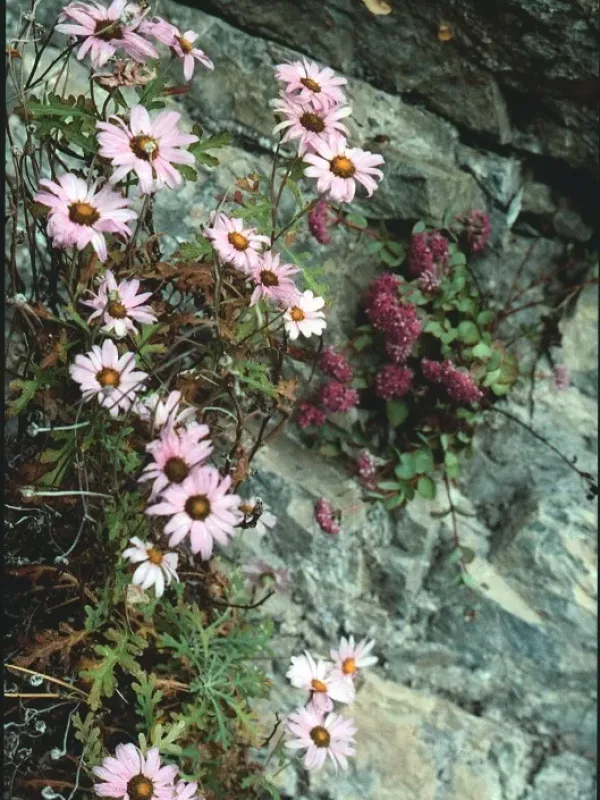
Japanese dendranthema (Dendranthema japonicum) is a perennial flowering plant belonging to the Asteraceae family. Known for its resilience and attractive foliage, it is widely appreciated in horticultural practices for its ability to provide late-season color.
Originating from East Asia, this plant thrives in environments that mimic its natural habitat: sunny slopes and areas with moderate rainfall. It is well-suited for temperate garden climates where it can establish a strong root system over several years.
The plant requires well-draining, nutrient-rich soil to perform optimally. A pH range between 6.0 and 7.0 is ideal for nutrient uptake, and the incorporation of organic compost is highly recommended during the planting phase to improve soil structure.
Sunlight exposure is a critical factor for the development of Japanese dendranthema. At least six hours of direct sunlight per day are necessary to ensure the plant remains compact and produces an abundance of flowers during the autumn period.
Water management must be consistent, particularly during the active growth phase in summer. However, the soil must be allowed to dry out slightly between waterings to prevent the development of root-borne pathogens and ensure healthy gas exchange.
Main diseases and pests
Common pathological threats include powdery mildew and rust, which often appear during periods of high humidity and poor air circulation. These diseases can quickly compromise the plant's decorative value if left untreated.
Pests such as aphids and spider mites are frequent invaders of the tender foliage. These insects can cause stunted growth, leaf curling, and in severe cases, the death of individual stems due to sap extraction.
Effective pest management involves the use of horticultural oils or insecticidal soaps as a first line of defense, followed by targeted chemical treatments if the infestation reaches economic thresholds.
Cultural practices, such as proper plant spacing and thinning out dense foliage, are essential for increasing airflow and significantly reducing the risk of fungal outbreaks within the garden bed.
Monitoring the undersides of the leaves is a key scouting technique to detect early stages of pest colonies, allowing for timely intervention and minimizing the need for heavy pesticide usage.