
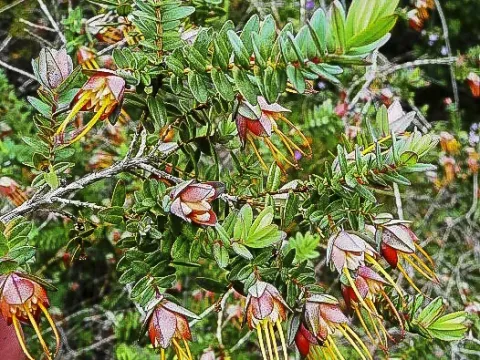
Darwinia
Darwinia
Darwinia is a genus of evergreen shrubs belonging to the Myrtaceae family. Native exclusively to Australia, these plants are known for their unique floral structures and are highly regarded in both ornamental gardening and specialized botanical collections.
What the section contains


Darwinia
Botanically, the plant is characterized by small, often needle-like leaves and distinct inflorescences. The flowers are typically enclosed by vibrant bracts, which provide the primary visual appeal and contribute to the plant's long-lasting display during the flowering season.
Successful cultivation of Darwinia requires excellent soil drainage, as the roots are highly susceptible to rot in waterlogged conditions. A sandy or gritty soil mix that mimics their natural Australian habitat is considered optimal for healthy growth.
The plant thrives in sunny to partially shaded locations with protection from harsh, drying winds. While they can tolerate a range of temperatures, they are not frost-hardy and generally require a mild, Mediterranean-style climate to flourish outdoors throughout the year.
In practice, Darwinia is often used as a container plant or in rock gardens, where its compact habit and fascinating flowers stand out. Proper management of water and light is essential for maintaining the vigor and aesthetics of these slow-growing shrubs.
The primary threats to Darwinia health are fungal pathogens, specifically those causing root rot. Prevention relies heavily on avoiding overwatering and ensuring that the planting medium never remains saturated for extended periods.
Pests like spider mites and mealybugs can occasionally infest the plants, particularly when grown in protected environments like greenhouses. Regular monitoring and the maintenance of good air circulation are effective cultural controls.
Nutrient imbalances, particularly iron deficiency, can lead to chlorosis. This condition manifests as yellowing leaves and is usually addressed by correcting the pH balance of the soil and applying appropriate chelated iron supplements.
Salt sensitivity is a significant physiological issue for this genus. Exposure to saline water or fertilizers high in certain salts can quickly cause foliage damage and decline, making the use of high-quality, low-salt water essential.
Pruning is vital not only for shape but for plant hygiene. Thinning the canopy periodically encourages better airflow, which significantly reduces the risk of fungal infections within the dense foliage of the shrub.