
Sharp-leaved swallow-wort
Cynanchum acutum
Description
Growing requirements
Sharp-leaved swallow-wort, scientifically known as Cynanchum acutum, is a perennial herbaceous climbing plant belonging to the Apocynaceae family. It is recognized for its aggressive growth habit and deep-rooted rhizome system that poses a significant challenge to agricultural productivity.
The native range of this species covers the Mediterranean region, Central Asia, and parts of the Caucasus. It is highly adaptable to various environments, including saline soils, riverbanks, and agricultural fields, where it thrives by utilizing crops as structural support for its vines.
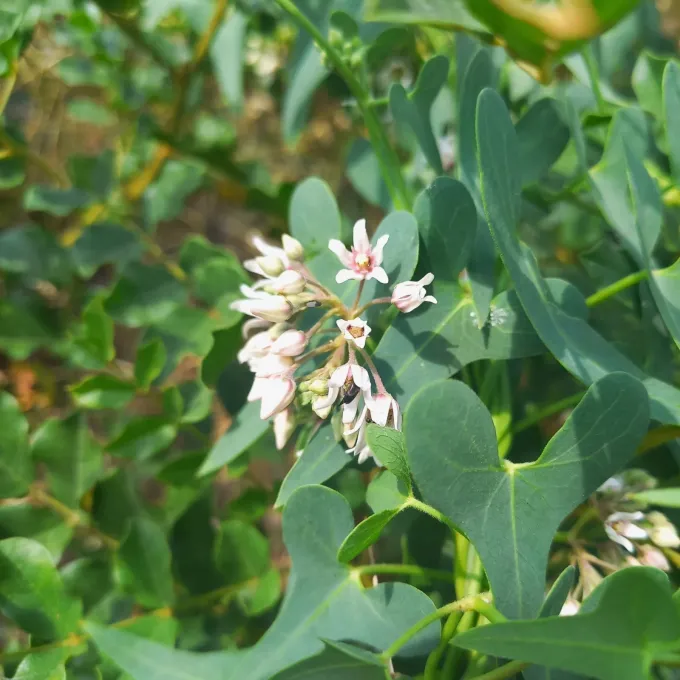
Botanically, the plant is characterized by its long, twining stems and sagittate-shaped leaves. Its small, fragrant flowers are arranged in umbellate clusters, which produce wind-dispersed seeds equipped with silky tufts, allowing the plant to colonize new territories efficiently.
Climatic requirements focus on warmth and sunlight, as the species is highly adapted to hot, semi-arid conditions. It demonstrates exceptional resilience to heat stress, largely due to its ability to develop an extensive root network that maintains hydration during dry summer months.
Agrotechnical management relies on long-term strategies. Mechanical tillage is often insufficient because the rhizomes can regenerate from small fragments. Therefore, farmers are encouraged to integrate cultural practices, such as crop rotation and the use of competitive cover crops, to reduce the infestation pressure.
Main diseases and pests
Cynanchum acutum possesses natural defense mechanisms, including alkaloids and latex in its tissues, which make it largely resistant to common agricultural pests. Consequently, it rarely suffers from significant herbivory, allowing it to maintain vigorous health in diverse agricultural settings.
Similarly, the plant shows limited susceptibility to fungal or bacterial pathogens that typically affect crop species. Its robust immune system ensures that it remains competitive and dominant in environments where other weeds might be suppressed by natural enemies.
The primary agricultural threat posed by this plant is its role as an alternative host for viral pathogens. Insects, such as aphids and leafhoppers, can easily transmit viruses from the weed to nearby vegetable or cotton crops, leading to significant yield losses in infected fields.
Chemical control remains the most effective way to manage heavy infestations. Systemic herbicides, particularly those based on glyphosate, are applied during active growth stages to ensure the chemical is transported into the rhizomes, effectively killing the plant from within.
Implementation of a strict field management plan is necessary to minimize spreading. This includes monitoring field margins, immediate destruction of new seedlings, and applying precise chemical treatments to prevent the maturation of seeds, which are the primary means of long-distance dispersal.