
Curio ficoides
Curio ficoides (L.) P. V. Heath
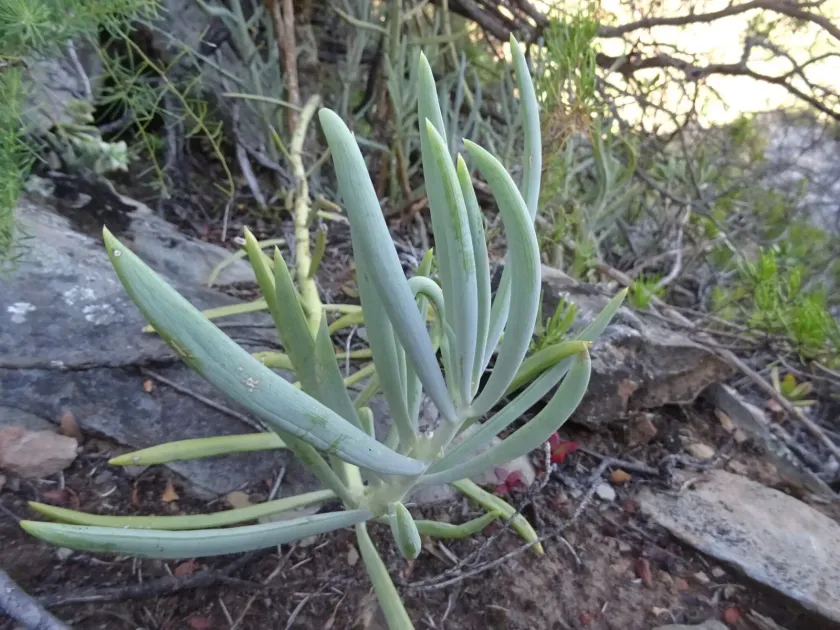
Description
Growing requirements
Curio ficoides, formerly classified as Senecio ficoides, is a succulent plant belonging to the Asteraceae family. It is native to the coastal and arid regions of South Africa, where it has evolved to survive in nutrient-poor and high-sunlight environments.
This species is highly prized for its structural, blue-gray foliage. It requires full sun exposure to maintain its compact growth form and vibrant coloration. If placed in shaded areas, the plant will become etiolated, losing its aesthetic appeal and structural integrity.
The substrate must provide exceptional drainage. A well-aerated mix consisting of pumice, perlite, and coarse sand mixed with a small amount of potting soil is ideal. The goal is to mimic the rocky, fast-draining soils of its native habitat.
Irrigation should follow the "soak and dry" method. The soil must be allowed to dry out completely between waterings. Overwatering is the most common cause of failure in cultivating this species, particularly during winter dormancy when water uptake is minimal.
Temperature management is essential, as the plant is not frost-tolerant. It thrives in warm conditions but can withstand moderate temperature fluctuations. In cooler climates, it must be grown in containers that can be moved indoors before the first autumn frost.
Main diseases and pests
Root rot is the primary physiological threat to Curio ficoides. This condition is almost exclusively caused by overwatering or using a medium with poor drainage, which deprives the roots of necessary oxygen and encourages pathogenic fungal activity.
Mealybugs are the most common pests affecting this plant. They tend to cluster in the leaf axils and stems, secreting a white, waxy substance. Manual removal or application of horticultural oils is often necessary to control infestations.
In very dry indoor conditions, spider mites may become problematic. These microscopic pests cause stippling on the leaves and can lead to significant vigor loss if left unchecked, requiring regular monitoring and adequate air circulation.
Fungal leaf spots can occur if the foliage remains wet for extended periods in high humidity. To prevent this, ensure that watering is done at the base of the plant, avoiding direct wetting of the leaves and stems.
Maintaining plant health through balanced, low-nitrogen fertilization during the growing season helps the plant resist secondary infections. Stronger, well-nourished plants are generally less susceptible to the negative impact of common succulent pests.