
Candle Plant
Curio articulatus (L. f.) P. V. Heath
Description
Growing requirements
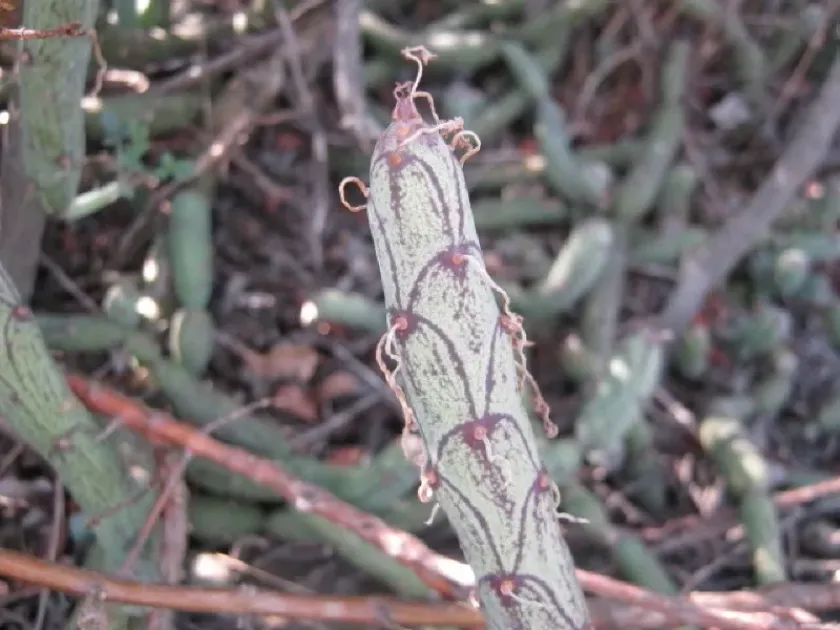
The Candle Plant (Curio articulatus), also known as the hot dog cactus, is a unique succulent species belonging to the Asteraceae family. It is widely cultivated for its distinct, segmented stems.
The plant is native to South Africa, where it has evolved to survive in arid, rocky environments with intense sunlight. Its growth cycle is strictly adapted to seasonal changes in moisture and temperature.
Botanically, it is a deciduous succulent that sheds its leaves during dormant periods to conserve water. The fleshy, glaucous stems are the primary photosynthetic organs for most of the year.
Cultivation requires a highly porous and gritty soil mix. Good drainage is non-negotiable to mimic the natural rocky habitats where the species thrives in the wild.
Exposure to bright, filtered light is essential for compact growth. Inadequate light levels will cause the plant to etiolate, making the segments weak and prone to snapping under their own weight.
Main diseases and pests
The primary threat to the Candle Plant is overwatering, which quickly leads to root rot. It is critical to allow the soil to dry out completely between successive waterings.
Pest issues often involve mealybugs, which congregate in the crevices of the segmented stems. These pests can be manually removed or treated with insecticidal soaps if infestations occur.
Fungal diseases, such as stem rot, are common if the humidity levels are too high or if the air circulation is poor. Keeping the plant in a well-ventilated area is a key preventive measure.
Root system health is often compromised by using potting mixes that retain too much moisture. Amending potting soil with perlite or pumice is standard practice for healthy development.
During the winter dormancy period, the plant requires very little water and cooler temperatures. Failure to provide this rest period can weaken the plant and make it susceptible to opportunistic pathogens.