
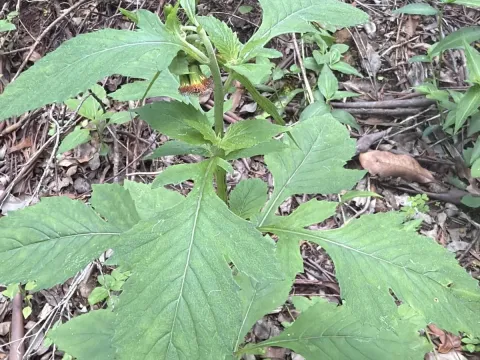
Crassocephalum
Crassocephalum Moench
Crassocephalum, a member of the Asteraceae family, is a warm-season crop that thrives in tropical and subtropical climates. Sowing should ideally commence at the onset of the rainy season to ensure sufficient moisture for seedling establishment.
What the section contains

Crassocephalum
The seeds are minute and should be sown shallowly, ideally using a nursery tray method before transplanting to the main plot. This ensures a higher survival rate of the delicate seedlings during their early growth stages.
In temperate zones, the crop must be grown exclusively in greenhouses or under protective structures as it is strictly intolerant to frost and cold winds.
Row spacing should be maintained at 30 centimeters to ensure adequate space for development and to facilitate manual weeding and maintenance of the plants.
Germination typically occurs within one to two weeks, provided the temperature remains consistently above 20 degrees Celsius and the substrate remains moist.
The plant performs best in well-drained, fertile soil rich in organic matter. Sandy loams are preferred as they prevent waterlogging, which the plant is highly susceptible to.
While Crassocephalum enjoys full sunlight, it shows better leaf quality and lower tendency to flower prematurely when grown in partial shade during intense heat periods.
Water requirements are significant; constant soil moisture is essential for producing succulent leaves. Drought stress leads to the rapid development of tough, fibrous leaves that are less palatable.
The ideal soil pH range for this crop is between 6.0 and 7.0. If the soil is too acidic, applying lime is necessary to optimize nutrient availability for the plant.
Regular fertilization with nitrogen-rich organic compost encourages rapid vegetative growth, which is the primary objective of cultivating this leaf vegetable.
The primary yield of Crassocephalum consists of its tender leaves and succulent young stems. It is widely recognized in many cultures as a nutritious leafy vegetable.
Harvesting can begin within 4 to 6 weeks of planting. By picking only the tips, gardeners can promote continuous branching, thereby increasing the cumulative yield per season.
With proper management and regular harvesting cycles, the crop can provide a steady supply of greens for several months, depending on the climatic conditions.
Productivity is highly correlated with the frequency of pruning. More aggressive, yet careful, harvesting of the growing points induces the plant to spread horizontally.
The overall yield per unit area can be very high in intensive cultivation systems where soil fertility and moisture are meticulously managed.
Common pests include aphids and various lepidopteran larvae that can decimate the soft leaf tissue if left unchecked. Early detection is critical for successful control.
Fungal pathogens such as powdery mildew are common in poorly ventilated areas with high humidity, often requiring spacing adjustments to mitigate risks.
Root-knot nematodes can be a limiting factor in long-term cultivation, necessitating crop rotation practices or soil solarization to maintain healthy yields.
Integrated pest management, including the use of botanical insecticides and manual removal, is recommended to keep the harvest safe for consumption.
- Ensure proper spacing to minimize disease spread.
- Implement crop rotation to avoid soil-borne pathogens.
- Use organic mulching to keep plants healthy and stress-free.
Harvesting is typically done manually, involving the careful snapping or cutting of the apical stems and the youngest, most tender leaves.
The best time to harvest is early in the morning. This practice ensures that the plant cells are fully turgid, resulting in a fresher product with a longer shelf life.
Care must be taken to sanitize tools used for cutting to prevent the transmission of bacteria or fungi from one plant to another within the plot.
Post-harvest management involves keeping the product cool and away from direct sunlight, as the thin leaves lose water rapidly after being detached.
When the plant reaches maturity and begins to produce flower buds, harvesting should be intensified to discourage the plant from shifting its resources to seed production.