
Cordyline rubra
Cordyline rubra
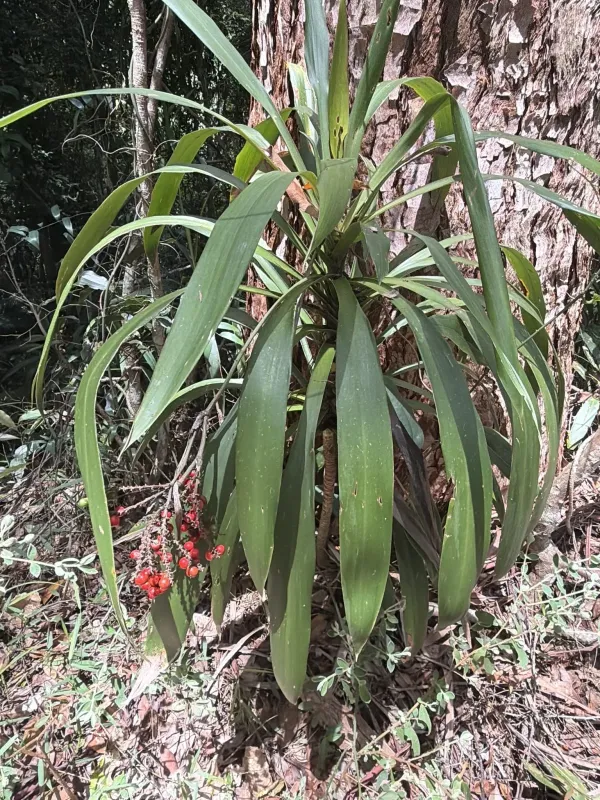
Description
Growing requirements
Cordyline rubra, commonly known as a type of palm lily, is a robust ornamental plant belonging to the Asparagaceae family. Originating from the coastal rainforests of eastern Australia, it is highly valued for its striking reddish-purple foliage and elegant architectural form.
This species thrives in bright, indirect light, which is essential for maintaining the deep pigmentation of its leaves. While it can adapt to lower light conditions, direct afternoon sunlight should be avoided to prevent foliar scorching and dehydration of the plant tissue.
Soil requirements for Cordyline rubra involve a well-draining, nutrient-rich potting medium. A mix containing peat moss, pine bark, and perlite provides the necessary structure to support root aeration while retaining sufficient moisture for the plant's metabolic processes.
Climatic preferences center on tropical warmth, ideally maintaining temperatures between 18°C and 26°C. It is intolerant of frost and cold drafts; therefore, it requires stable environmental conditions to prevent physiological stress or leaf drop.
Proper irrigation management is vital. The plant prefers consistent soil moisture but strictly avoids waterlogging. During the growing season, watering should occur once the top third of the soil has dried out, ensuring excess water drains away completely from the pot.
Main diseases and pests
Cordyline rubra is susceptible to common greenhouse pests such as spider mites, mealybugs, and scale insects. These pests often congregate in leaf axils or on the undersides of foliage, causing yellowing and stunted growth if left unmanaged.
Fungal pathogens, particularly those causing leaf spot diseases, are frequent threats when airflow is stagnant. These appear as irregular dark spots that may expand rapidly under humid, poorly ventilated conditions, compromising the plant's aesthetic appeal.
Root rot, primarily caused by excessive moisture or soil compaction, is a significant threat. It manifests as a softening of the stem base and sudden collapse, necessitating immediate repotting into fresh substrate and pruning of affected root sections.
Integrated pest management strategies involve regular monitoring and the use of neem oil or targeted insecticides to eliminate infestations. Maintaining cleanliness by removing dust and debris from leaves helps significantly in preventing pest colonization.
To ensure long-term health, avoid over-fertilization, as high salt accumulation in the soil can lead to chemical burns on leaf tips. Providing a balanced, dilute liquid fertilizer during the active growing months supports vigorous development and disease resistance.