
Cordyline hybrids
Cordyline hybrids
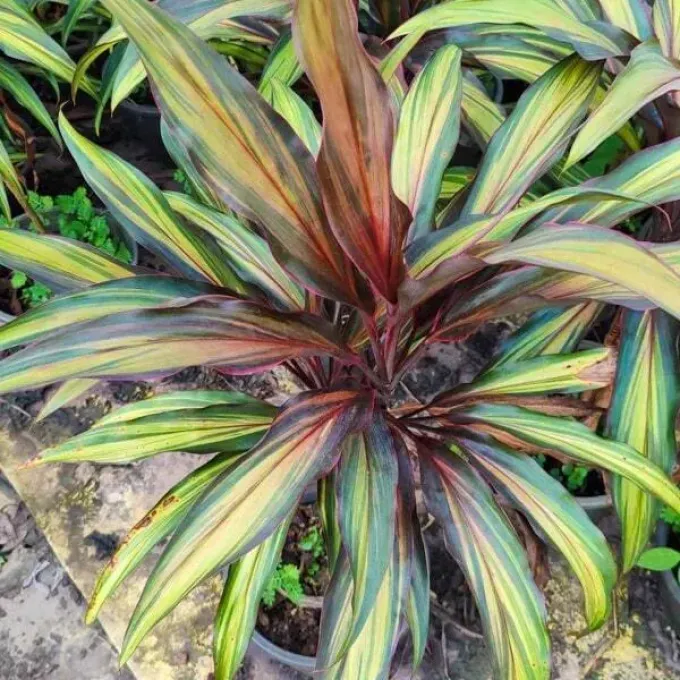
Description
Growing requirements
Cordyline hybrids belong to the Asparagaceae family and comprise a diverse range of ornamental varieties bred for their striking foliage colors and shapes. Their origins trace back to tropical regions of Southeast Asia and the Pacific, influencing their high humidity and warmth requirements.
These plants thrive in bright, indirect light to maintain the intensity of their leaf coloration. Direct afternoon sunlight can be detrimental, leading to leaf scorching, while insufficient light often results in the loss of vibrant variegation and leggy growth patterns.
The substrate must be well-draining, nutrient-rich, and slightly acidic to neutral in pH. A professional potting mix usually consists of peat, perlite, and pine bark to ensure proper aeration for the delicate root system of the plant.
Optimal growth occurs at temperatures between 20°C and 26°C. While they appreciate high ambient humidity, it is crucial to ensure good air circulation to prevent the development of fungal pathogens and to keep the foliage clean and healthy.
Watering should be managed based on the moisture level of the upper soil layer. It is better to keep the soil consistently moist but never waterlogged, as stagnant water is the primary cause of root rot in indoor ornamental cultivation.
Main diseases and pests
Spider mites represent a major threat, particularly in environments with low humidity, where they rapidly colonize the undersides of leaves and cause severe chlorosis.
Scale insects are commonly found attached to the stems and leaf veins, draining plant energy and producing honeydew, which leads to the growth of sooty mold.
Root rot caused by Pythium or Phytophthora species is a serious pathology usually triggered by improper irrigation habits and lack of drainage in the growing container.
Thrips can inflict significant damage by puncturing plant tissues, which disrupts normal development and serves as an entry point for secondary bacterial infections.
Integrated pest management, including regular visual inspections and the use of insecticidal soaps or systemic pesticides, is essential for maintaining the vigor of the culture.