
Corchorus tridens
Corchorus tridens L.
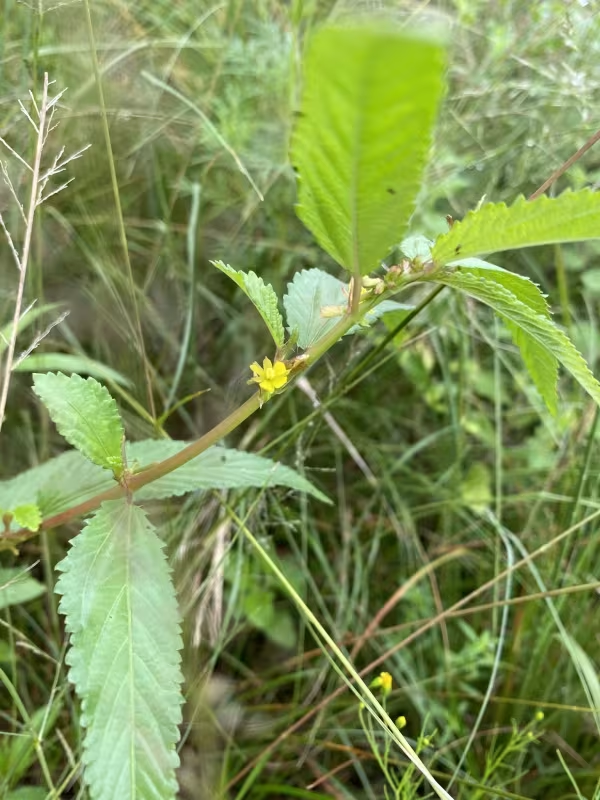
Description
Sowing dates
Corchorus tridens is a heat-loving crop, so sowing should only take place once the soil has warmed up to 18–20°C. In the primary cultivation regions, this usually aligns with the start of the rainy season or consistent spring warmth.
Seeds are sown at a shallow depth of approximately 1–2 centimeters, which ensures even and rapid germination. It is crucial to remember that the crop is sensitive to moisture deficit during the early stages, so pre-sowing irrigation is recommended if the spring is dry.
Plant density significantly affects fiber quality. An optimal sowing scheme involves keeping row spacing at 15–20 centimeters, allowing plants to develop vigorously while effectively suppressing weed growth during the early growth phase.
Before planting, it is advisable to calibrate and treat the seeds. This practice minimizes the risk of fungal infections, which are common when soil or atmospheric humidity remains high during the early establishment of the crop.
Seedlings emerge relatively quickly, often within 5–7 days under favorable conditions. Maintaining weed-free fields is critical from this point onward, as Corchorus grows slowly during the seedling stage and does not tolerate competition from weeds.
Growing requirements
This plant belongs to the Malvaceae family and is a close relative of jute. The crop requires high temperatures, with an optimal growth range between 25°C and 35°C, making it suitable for tropical and subtropical climates.
Corchorus tridens prefers fertile, loose soils with a neutral or slightly acidic pH. It performs best in sandy loam or loam soils rich in organic matter, which provide both the necessary nutrients and adequate drainage for root health.
While the mature plant is relatively drought-tolerant, consistent moisture is required for the development of high-quality fiber-yielding stems. Waterlogging must be avoided, as it can cause root rot and severely damage the overall crop yield.
The plant responds positively to nitrogen fertilization, which stimulates rapid vegetative growth. Balanced nutrition is key to producing long, strong fibers, which are essential for commercial use in the textile and packaging sectors.
Native to Africa and Asia, this plant has adapted to variable moisture cycles. This resilience makes it a promising agricultural candidate for жарких regions where water management is an essential part of the farming cycle.
Yield
Biomass yield depends heavily on the intensity of agricultural practices and soil fertility. On average, with proper technology, one can expect to harvest between 5 to 8 tons of dry stem biomass per hectare.
The fiber yield is a crucial metric, typically ranging from 10% to 15% of the total dry stem weight. The resulting fiber is known for its durability and is well-suited for manufacturing twine, coarse textiles, and various packaging materials.
Seed production is also a significant factor, especially for farmers interested in seed multiplication. A single healthy plant can produce up to 20 grams of seeds under favorable conditions during the flowering phase.
Inter-row cultivation is highly recommended to increase yield. This practice improves soil aeration and helps retain moisture, which is vital during hot summer days when evaporation rates are high.
Yield is measured based on the weight of dried raw material. Correct drying after harvest prevents fiber degradation and mold, ensuring the product maintains its strength and commercial value for industrial buyers.
Main diseases and pests
Root rots are the most significant threat to the crop, usually caused by excessive soil moisture. Pathogenic fungi can infect the root neck, leading to wilting and complete loss of individual plants in the field.
Insect pests, such as certain species of cutworms and leaf-eating beetles, can cause substantial damage to the foliage. Severe infestations can significantly hinder development and reduce the overall fiber quality of the stems.
Pest management relies on both biological control and systemic insecticides. Weekly monitoring of the fields is recommended to detect infestation hotspots early, preventing them from spreading across the entire plantation.
Disease prevention is primarily based on crop rotation. It is strongly advised not to plant Corchorus in fields recently used for other Malvaceae family crops, as they may share common soil-borne diseases.
Weed management is essential not only for resource competition but also because weeds often serve as reservoirs for viral diseases. Clean fields are the foundation for a healthy crop and a consistent, high-quality harvest.
Harvesting
Harvesting is typically conducted during the mass flowering phase or shortly after the pods begin to form. At this stage, the fiber has reached its peak strength, flexibility, and overall quality for industrial processing.
Stems are cut as close to the ground as possible, using either mechanical harvesters or manual tools. Maximizing the length of the stem is a priority, as it directly increases the value of the raw fiber produced.
After cutting, the stems are bundled and dried. It is essential to ensure adequate airflow between the bundles to allow even moisture evaporation, which prevents the fiber from darkening and losing its market appeal.
Processing involves retting or mechanical decortication to separate the fiber from the woody inner core of the stem. Water retting is a traditional method that produces softer, more flexible fibers.
Once separated, the fibers are sun-dried to reach the required moisture content. The final product is then compressed into bales, which simplifies storage, logistics, and transportation to textile manufacturing facilities.