
Nalta jute
Corchorus olitorius L.
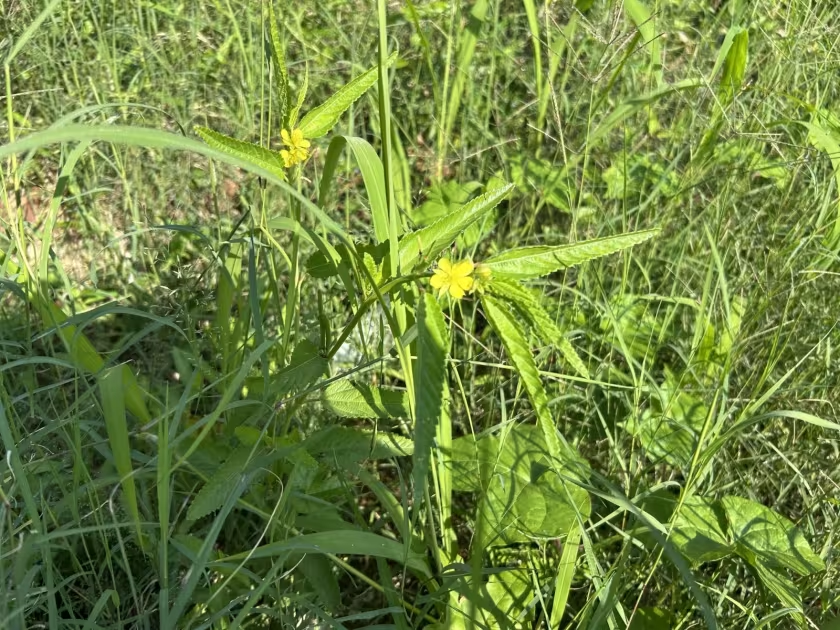
Description
Sowing dates
Nalta jute (Corchorus olitorius L.), belonging to the Malvaceae family, is a warm-season annual crop. It requires consistent high temperatures and a frost-free growing period to thrive.
Sowing should be performed when the soil temperature consistently reaches 18–20°C. Planting too early, when the soil is cold, leads to poor germination and stunted early growth.
Seeds are typically sown at a depth of 2–3 cm. Proper soil moisture is critical at the time of sowing to ensure uniform emergence across the field.
For fiber production, high-density seeding is recommended. This encourages the plant to grow tall and straight with minimal branching, resulting in longer and higher-quality fibers.
Weed management during the first 30 days is crucial for Nalta jute, as the crop is initially slow-growing and can be easily outcompeted by aggressive weeds.
Growing requirements
Nalta jute thrives in tropical and subtropical climates with an ideal temperature range of 25–35°C. The plant stops growing when temperatures drop significantly.
The crop requires high rainfall or regular irrigation, totaling about 1000–1500 mm annually. While it needs ample water, it cannot tolerate waterlogging for extended periods.
Fertile, well-drained loamy or alluvial soils are preferred. These soils provide the necessary structure and nutrient availability for the plant to reach its full height potential.
Nitrogen is the most important nutrient for biomass production. Adequate potassium levels are also required to improve the structural strength of the stem fibers.
Full sun exposure is necessary for photosynthesis. Shaded areas often result in weaker stems with lower fiber content and reduced resistance to pests.
Yield
The yield of dry fiber typically ranges from 1.5 to 3 metric tons per hectare, depending on soil fertility, variety, and the level of agricultural inputs provided.
Proper management of plant density is a key factor in maximizing yield per hectare. Overcrowding can lead to thin, weak stems, while sparse planting promotes excessive branching.
When cultivated as a leafy vegetable, Nalta jute produces high yields of nutritious greens. Multiple harvests are possible if the apical meristem is pruned properly.
The total growing cycle for fiber is usually between 90 and 120 days. Early harvesting results in finer fiber, while late harvesting provides more fiber but of a coarser quality.
Advancements in breeding have led to varieties with higher fiber extraction rates, significantly improving the economic viability of Nalta jute for farmers.
Main diseases and pests
Anthracnose and root rot are common fungal diseases that thrive in humid conditions, often resulting in significant plant mortality if left unmanaged.
Pests such as the jute hairy caterpillar and various leaf-chewing beetles can cause severe defoliation, which directly impacts the plant's photosynthetic capacity.
Root-knot nematodes represent a hidden threat, causing knots on the roots that disrupt water and nutrient uptake, leading to stunted plants.
Integrated Pest Management (IPM) practices, including proper crop rotation and the use of resistant varieties, are highly recommended to control these threats.
Chemical control should only be used as a last resort, ensuring that selected products are effective and safe for the intended end-use of the fiber or leaves.
Harvesting
Harvesting for fiber is optimally performed at the early flowering stage. This is when the fiber is at its peak quality, offering the best balance of length and strength.
The stems are cut near ground level and bundled for retting. Retting is a biological process where bundles are submerged in water to soften the tissues surrounding the fibers.
Once retting is complete, the fiber is manually or mechanically extracted, washed to remove impurities, and dried under the sun to prevent discoloration or fungal growth.
Seed production requires harvesting after the seed pods have turned brown and reached physiological maturity, followed by threshing and careful drying.
For vegetable usage, harvesting consists of picking young, tender leaves and stems. Regular harvesting encourages branching and prolongs the productive life of the plants.