
West Indian jute
Corchorus aestuans L.
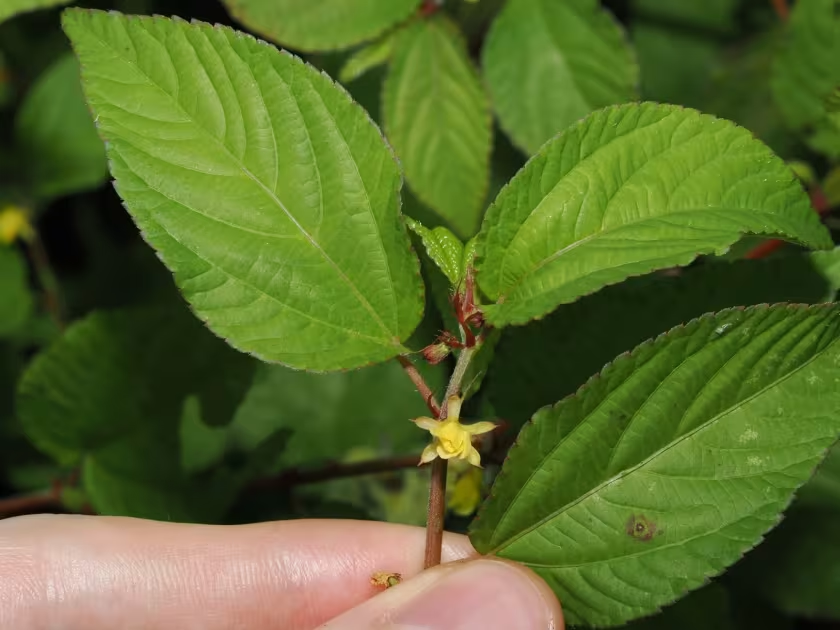
Description
Sowing dates
West Indian jute is a tropical plant, and its sowing schedule depends strictly on the arrival of consistent warm weather. In cultivation regions, sowing begins when soil temperatures at a depth of 5-10 cm reach +20...+25°C.
The optimal time for establishing plantations coincides with the start of the rainy season, ensuring that seedlings receive the necessary moisture during their initial growth stages. Early sowing allows the crop to maximize the long-day period for biomass accumulation.
For direct seeding, seeds are sown at a depth of no more than 1-2 cm to avoid hindering germination. Seeding density is adjusted based on the cultivation goal: higher density is typically used for fiber production to encourage taller stems.
When using transplanting methods, seeds are sown in seedling trays 3-4 weeks before planting in the field. This helps the crop adapt quickly to field conditions and reduces competition with weeds during the early vegetative phase.
Proper land preparation is crucial for success, as the crop grows relatively slowly at the start. Clearing the field of weeds and performing high-quality tillage are mandatory agricultural practices for successful root establishment.
Growing requirements
As a member of the Malvaceae family, West Indian jute is a warmth-loving annual. The plant thrives best at stable temperatures ranging from +25 to +35°C and is highly sensitive to even brief periods of frost, which can kill the crop.
The crop is demanding regarding soil moisture, especially during the stage of active stem growth. However, waterlogging must be avoided as it leads to root rot and hinders the formation of high-quality fiber bundles.
Light, well-drained loams or alluvial soils with a neutral to slightly acidic pH are ideal. High organic matter content in the soil significantly improves both fiber quality and total plant biomass productivity.
The plant is photophilic, requiring open sites protected from strong winds that could cause lodging. Full sunlight positively influences fiber development and accelerates the maturation of seed capsules.
Cultivation practices include regular weeding and hoeing between rows to ensure oxygen access to the root system. Nitrogen fertilization during the initial vegetative phase stimulates rapid stem growth, which is critical for technical fiber production.
Yield
The economic yield of Corchorus aestuans depends on plant density and soil fertility. Following an intensive cultivation technology, significant amounts of green biomass can be harvested per hectare.
The primary value of the crop lies in its stem, from which coarse fiber is extracted for industrial use. Fiber yield is directly correlated with stem height, which can reach over one meter under optimal conditions.
Seed productivity is also high, allowing growers to secure their own planting material for subsequent cycles without significant additional costs. Fruits are capsules that mature unevenly, requiring careful management during the harvest.
The green biomass can be used as green manure or as a feed supplement after proper processing. In some regions, the plant is grown as a cover crop, capable of accumulating organic matter quickly in tropical climates.
Optimizing nutrition with a focus on phosphorus and potassium fertilizers during the flowering period enhances seed quality. This ensures not only higher yields but also superior germination rates for future seasons.
Main diseases and pests
West Indian jute is susceptible to several phytopathologies common among Malvaceae in high-humidity conditions. The most frequent issues are fungal infections of leaves and stems caused by Colletotrichum pathogens.
Root rot is a major threat if water management is poor or if the soil structure is too heavy. The infection manifests as plant wilting and darkening of the root collar, often leading to total crop loss in poorly drained fields.
Among pests, various caterpillars cause the most damage by feeding on leaves and terminal buds. Active insect feeding during the vegetative stage significantly reduces photosynthetic potential and stunts growth.
Aphids and whiteflies can also infest young shoots, sucking sap and acting as vectors for viral diseases. Monitoring pest populations early allows for the timely application of biological agents or insecticides.
Disease prevention involves crop rotation, excluding related species (like okra or cotton) for 3-4 years. It is also important to use certified, disease-free seed material that has undergone pre-sowing fungicide treatment.
Harvesting
The timing of the harvest depends on the final purpose: technical fiber production or seed collection. For high-quality fiber, plants are mowed during the peak flowering stage before the stems become too lignified.
Mechanical harvesting involves mowing stems at ground level, followed by bundling. The retting process is conducted in water bodies or specialized tanks to separate the phloem from the woody core.
Seed collection is performed after the capsules turn brown to prevent premature shattering and seed loss. Harvesting is often done in stages, cutting the upper parts of the plants that contain the most mature fruits first.
After collection, seed material must be thoroughly dried in shaded, well-ventilated areas. This prevents spoilage and maintains high germination energy for subsequent planting cycles.
After fiber extraction, plant residues can be shredded and incorporated back into the soil as mulch or organic fertilizer. This practice helps maintain soil fertility and improves physical structure for future crops.