
Field bindweed
Convolvulus arvensis L.
Description
Growing requirements
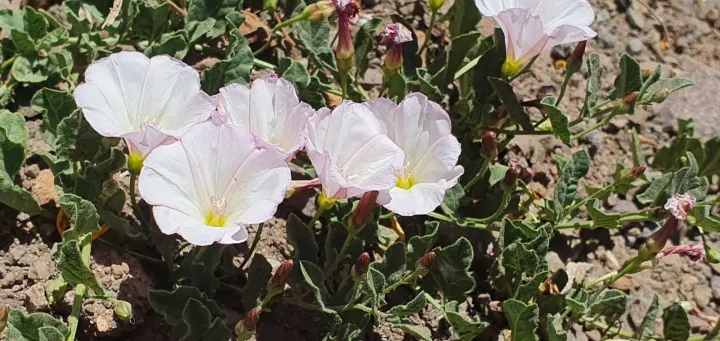
Field bindweed (Convolvulus arvensis L.) is a perennial herbaceous plant belonging to the Convolvulaceae family. It is recognized globally as one of the most persistent and problematic weeds in agricultural fields and gardens.
The plant has a cosmopolitan distribution, thriving in temperate and subtropical regions. Its incredible success as a weed is primarily due to its deep taproot system, which can reach depths of several meters, allowing it to survive extreme drought conditions.
Field bindweed prefers sunny locations and fertile soils, but it shows remarkable adaptability to various soil types, ranging from sandy to heavy clay. It is capable of rapid vegetative propagation through both seeds and rhizome fragments.
Agricultural practices for management focus on depletion of the plant's food reserves. Frequent cultivation or tillage, which interrupts the photosynthesis process and forces the plant to rely on energy stored in the roots, is a standard method of control.
From an economic standpoint, field bindweed is considered a major nuisance. It acts as a primary competitor for water and nutrients, effectively reducing the yield of cereals, row crops, and horticultural plantings through its aggressive twining habit.
Main diseases and pests
This weed acts as a significant reservoir for various plant viruses and pathogens. Insects often transmit these diseases from the bindweed to crops, which can lead to severe economic losses in sensitive plant varieties.
Several specialized insects, including bindweed gall mites and certain species of leaf beetles, are known to feed on this plant. While some of these are considered biological control agents, they rarely eliminate the weed population entirely.
Common diseases affecting the plant include powdery mildew, white blister rust, and leaf spots. Despite these infections, the plant's inherent vigor allows it to recover quickly, maintaining its status as a competitive invasive species.
Herbicidal control is the most common management tactic for commercial agriculture. Systemic herbicides, particularly those based on glyphosate or synthetic auxins, are effective when applied during the flowering stage for maximum translocation to the roots.
Due to the long-lived seed bank, which can remain viable in the soil for decades, field bindweed control is rarely a one-time operation. It requires a long-term integrated management strategy to prevent re-establishment of the plant in the fields.