
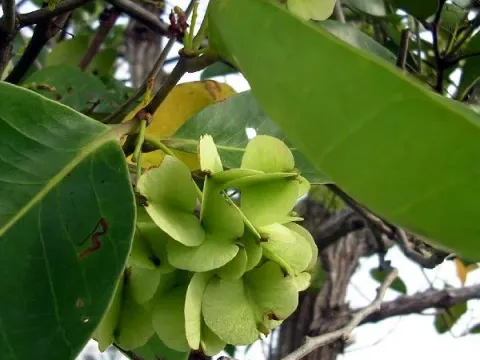
Combretocarpus
Combretocarpus
Combretocarpus, scientifically known as Combretocarpus rotundatus, is a member of the Rhizophoraceae family. This tree is native to the peat swamp forests of Southeast Asia, thriving in regions such as Malaysia and Indonesia.
What the section contains

Combretocarpus
The plant is highly specialized to exist in waterlogged, acidic soil conditions. It possesses unique root adaptations that allow it to survive in environments where oxygen levels in the substrate are exceptionally low.
Environmental conditions for Combretocarpus must be consistent with a tropical climate. It requires high humidity and constant moisture, making it unsuitable for cultivation in regions with dry seasons or temperate climates.
Regarding soil requirements, the species flourishes in deep peat deposits. It does not require high levels of mineral nutrients; instead, it relies on the organic stability of the swamp forest floor to anchor and grow.
In terms of хозяйственное use, the wood is noted for its density and durability. Historically, it has been used by local populations for construction purposes, particularly in areas where water resistance is a necessary trait for building materials.
The primary threat to Combretocarpus is the widespread drainage of peat swamp forests for industrial agricultural expansion. This loss of habitat is causing significant declines in natural populations across its native range.
Forest fires, exacerbated by the drying of peatlands, pose an extreme risk. Because the trees are adapted to wet conditions, they lack natural defenses against fire, and the substrate itself often becomes fuel during the dry periods.
Pathogenic threats include various types of fungal rot that may affect the root system if the water table is artificially altered. When the natural hydrological balance is disturbed, the plant loses its competitive advantage.
Competition from invasive plant species is an emerging threat. As the ecosystem changes due to human influence, non-native plants can outcompete Combretocarpus, leading to a reduction in its population density.
Conservation efforts are critical to the survival of the species. Sustainable management of peatland ecosystems and preventing the degradation of wetlands are the most effective ways to ensure the longevity of this botanical resource.