
Combretocarpus rotundatus
Combretocarpus rotundatus
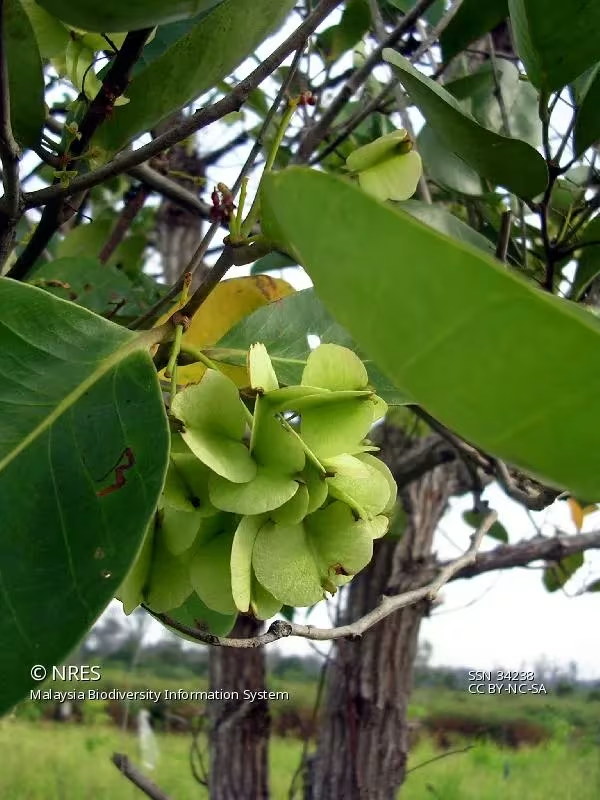
Description
Growing requirements
Combretocarpus rotundatus is a distinctive tree species belonging to the Anisophylleaceae family. Native to the tropical regions of Southeast Asia, specifically in Malaysia, Indonesia, and Brunei, it is primarily found in lowland peat swamp forests, where it thrives in waterlogged and acidic soils.
The plant has evolved to survive in environments where oxygen levels in the soil are significantly low. Its root system is specifically adapted to these hypoxic conditions, allowing the tree to dominate in habitats that are typically unsuitable for most other agricultural or forestry crops.
Climate requirements for this species are strictly tropical. It demands consistently high temperatures and abundant rainfall throughout the year, with a preference for high humidity. These environmental factors are crucial for the development of its characteristic leathery, rounded leaves.
Botanically, it is a sturdy, evergreen tree. The morphology of its foliage helps in minimizing water loss, even though it grows in a very humid environment. This physiological trait is essential for its successful growth in the canopy of the forest ecosystem.
Economically, the species is primarily valued for its timber. In its native range, the wood is highly regarded for its durability and strength. It is commonly used in local construction projects, particularly where materials need to withstand harsh, moisture-prone conditions.
Harvesting
Harvesting Combretocarpus rotundatus is a specialized activity due to the ecological fragility of the peat swamp environments where it grows. It requires careful management to ensure that forestry operations do not disrupt the hydrological balance of the swamp ecosystems.
The selection process for harvesting involves identifying mature trees that have developed the necessary wood density. Because the terrain is often swampy and unstable, traditional harvesting machinery is rarely feasible, leading to the use of manual or semi-mechanized techniques.
Post-harvest processing involves initial trimming and sorting in the forest before the timber is transported. Given the environmental constraints, logistics planning is a critical component of the harvest cycle to maintain efficiency and minimize costs.
Drying the timber is a complex process that requires precision to prevent warping and cracking. Proper curing of the wood is essential to fully realize its potential as a high-strength structural material, especially for use in exterior building applications.
The final product is utilized for various construction purposes, including supports and flooring. Its natural resistance to biological degradation makes it a preferred local choice in regions where humidity is a persistent challenge for standard timber varieties.