
Codium fragile
Codium fragile
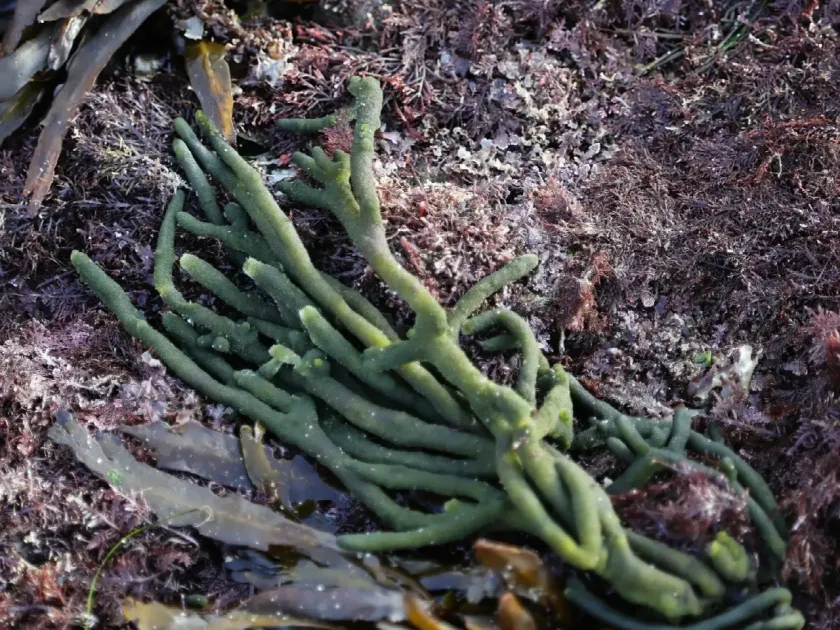
Description
Sowing dates
Codium fragile, commonly known as dead man's fingers, is a green macroalga that naturally propagates through both vegetative fragmentation and sexual reproduction.
In aquaculture, the sowing process involves attaching healthy thallus fragments to specialized ropes or mesh substrates, which allows for organized growth.
The optimal development period coincides with warmer months, during which the seaweed exhibits rapid biomass accumulation due to high solar radiation.
Producers must monitor the density of these fragments to ensure that each plant has enough surface area to develop its characteristic branching structure.
Artificial propagation techniques have been refined to focus on selecting vigorous donor plants that demonstrate resilience and fast growth rates in marine environments.
Growing requirements
This species belongs to the Codiaceae family and is known for its remarkable ability to tolerate fluctuating salinity and temperature levels in coastal waters.
A stable, hard substrate is essential for the attachment of the algae, as the plant relies on a specialized basal system to anchor itself against tidal forces.
The culture thrives in well-oxygenated, nutrient-rich waters, requiring specific levels of dissolved inorganic nitrogen and phosphorus for optimal health.
Light exposure is a critical factor; while the species is quite adaptable, controlled lighting conditions in tanks can enhance the quality and texture of the algae.
Temperature management is generally not a strict requirement, as the plant adapts to a wide range of aquatic climates, though moderate temperatures promote faster development.
Yield
The biomass yield of Codium fragile is highly efficient, making it a competitive candidate for commercial marine aquaculture projects across various regions.
Production cycles are frequently optimized by utilizing controlled environments where nutrient supply is balanced to maximize the rate of cell division.
Annual yield depends largely on the maintenance of the cultivation area, ensuring that environmental parameters remain within the growth-favoring range.
Regular harvesting cycles can be established to capitalize on the rapid regeneration capability of the plant, ensuring a steady supply for processing.
Scaling up production involves expanding the infrastructure of submerged ropes, allowing for massive volumes of harvestable seaweed in a relatively short timeframe.
Main diseases and pests
Major threats to Codium fragile populations include herbivory by marine invertebrates, particularly sea urchins, which can graze extensively on the thalli.
Pathogenic outbreaks, while relatively rare, can occur if water circulation is poor or if the density of the plants becomes too high for the available oxygen.
Biofouling by epiphytic algae, barnacles, or mussels can negatively impact the aesthetic and nutritional quality of the crop, necessitating periodic cleaning.
Environmental disasters like extreme storm surges and heavy sedimentation pose a significant risk to the physical integrity of the plant structures.
Human-induced pollution, particularly heavy metals and plastic debris, can compromise the safety and marketability of the harvested algae.
Harvesting
Harvesting is typically conducted manually by divers or through automated systems that carefully cut the thalli at the base to allow for regrowth.
Post-harvest handling is critical; the seaweed must be rinsed thoroughly to remove debris and then cooled immediately to prevent rapid enzymatic decay.
Processing methods include air-drying, salting, or freeze-drying, which preserve the bioactive compounds for pharmaceutical and food-grade applications.
Quality control during harvesting focuses on selecting specimens that are free from discoloration and have a firm, distinct texture characteristic of the species.
The final product is then packaged and shipped according to industrial standards, ensuring its value as a renewable marine resource is fully realized.