
Cocculus pendulus
Cocculus pendulus
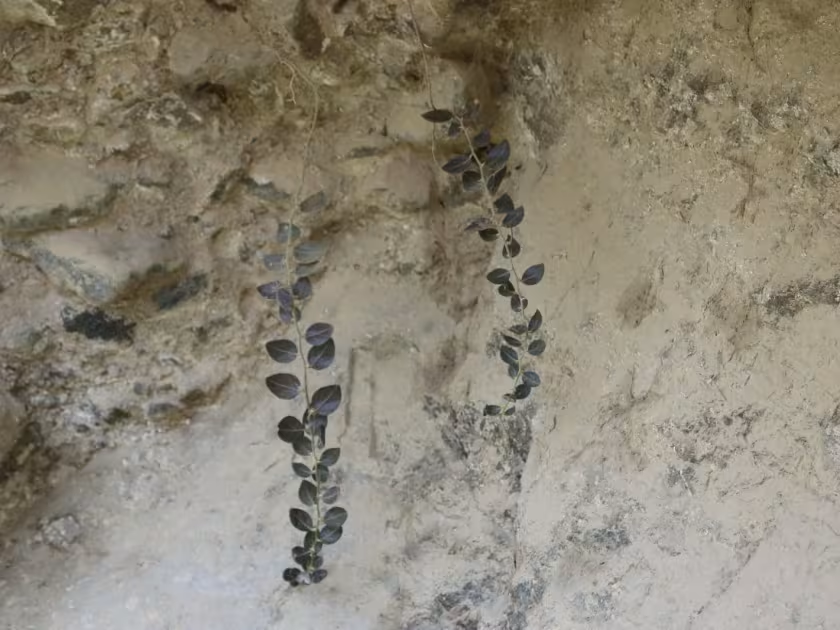
Description
Growing requirements
Cocculus pendulus, commonly known as the trailing cocculus, is a perennial evergreen shrub belonging to the Menispermaceae family. It is native to arid and semi-arid regions of Africa, the Middle East, and parts of the Indian subcontinent, where it serves as a critical component of the local xerophytic flora.
The plant thrives in high-temperature environments with intense solar radiation. Agronomic success with this species depends on mimicking its natural desert conditions, which include excellent drainage and minimal humidity, as the plant is highly susceptible to root rot in waterlogged soils.
Soil requirements for Cocculus pendulus include sandy, gravelly, or rocky substrates. It is well-adapted to low-nutrient profiles and does not require intensive fertilization, making it a low-input crop suitable for marginal lands in specific climatic zones.
Cultivation practices must focus on moisture management. Irrigation should be applied sparingly, allowing the soil to dry out completely between watering intervals. This resilience to drought makes it an interesting subject for xeriscaping and potential medicinal crop research.
The species is primarily recognized for its medicinal compounds found in various parts of the plant, often utilized in traditional practices. Its trailing growth habit also makes it a specialized ornamental crop in regions where water conservation is a priority.