
Carolina coralbead
Cocculus carolinus
Description
Growing requirements
Carolina coralbead (Cocculus carolinus) is a perennial woody vine belonging to the Menispermaceae family. Native to the southern United States, it is commonly found in moist woodlands, thickets, and along stream banks where it utilizes other vegetation for support.
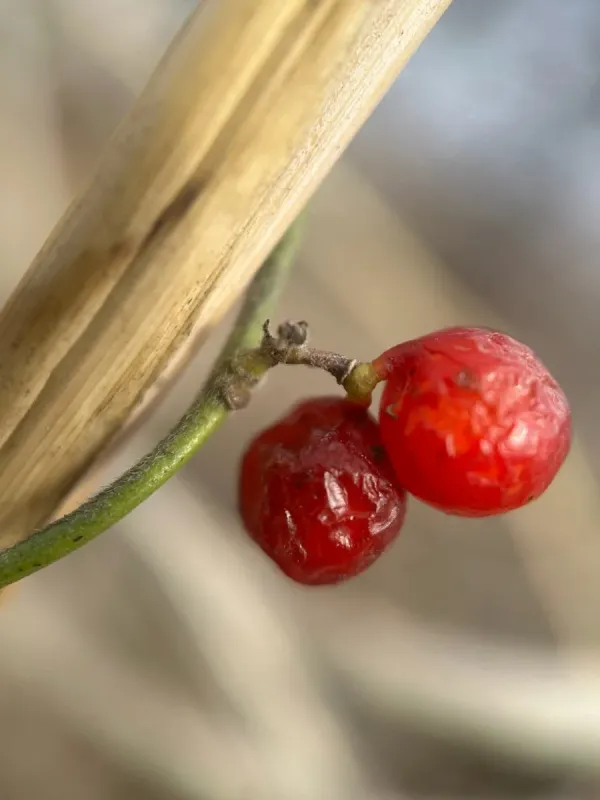
The plant is characterized by its alternate, variable-shaped leaves and drooping clusters of bright red berries that ripen in late summer and autumn. These drupes provide significant food for avian species, although they contain alkaloids toxic to humans and mammals.
Cultivation requires well-drained, fertile soil, though the plant is highly adaptable to various soil types including sandy or heavy clay compositions. It thrives in partial shade to full sun, provided the root zone remains sufficiently cool and moist.
Regarding agrotechnical management, providing sturdy vertical support is essential to allow the plant to reach its full growth potential. While mature vines are relatively drought-tolerant, supplemental irrigation during prolonged dry spells ensures maximum foliage density.
It is generally hardy in warmer temperate climates, where it exhibits vigorous growth. Gardeners should manage its spread carefully, as it can readily propagate from dispersed seeds in favorable environmental conditions.
Main diseases and pests
Carolina coralbead possesses a strong natural resistance to major agricultural pests, owing to the secondary metabolites present within its tissues which act as natural deterrents.
Powdery mildew is the most common fungal ailment encountered, particularly in humid environments where air circulation around the vine is restricted.
Occasional infestations of sap-sucking insects like aphids can occur on new growth, though these rarely cause lethal damage to established specimens.
The primary concern for land management is the plant's toxicity; livestock may ingest the foliage in pastures, necessitating its removal from grazing areas to prevent accidental poisoning.
Maintenance and pest control efforts focus on sanitation, such as removing dead or infected vines, to maintain plant vigor and prevent the colonization of potential fungal pathogens.