
Cissus discolor
Cissus discolor Blume
Description
Growing requirements
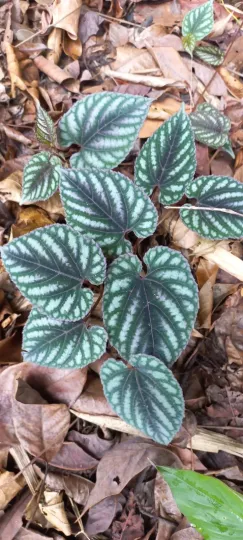
Cissus discolor, commonly known as the Painted Grape Vine, is a stunning ornamental species belonging to the Vitaceae family. Native to the tropical rainforests of Southeast Asia, this climbing vine is highly valued for its striking, velvet-textured foliage featuring silver, green, and deep purple patterns.
To cultivate this species successfully, a stable tropical climate is essential. The plant thrives in temperatures between 20°C and 26°C. It is particularly sensitive to cold drafts and rapid temperature fluctuations, which can cause significant physiological stress and lead to foliage drop.
Light requirements for Cissus discolor involve bright, indirect light. While it loves warmth, it must be protected from direct sunlight, which can easily scorch its delicate, patterned leaves. A spot near an east-facing window is often the most suitable location for consistent growth.
The soil should be well-draining, nutrient-rich, and slightly acidic. A mixture of peat moss, perlite, and high-quality potting soil works best to provide the necessary aeration for the root system while retaining sufficient moisture to satisfy the plant's tropical origins.
Agricultural and maintenance techniques require strict humidity control. The plant benefits from regular misting or the use of a humidifier. During the growing season, a balanced liquid fertilizer should be applied every two to three weeks to sustain the vibrant coloration of the foliage.
Main diseases and pests
Spider mites are the most common pests, especially in environments with low air humidity. They damage the leaves by piercing the epidermis, resulting in fine webbing and speckled, yellowing foliage that eventually withers if not treated with appropriate miticides.
Mealybugs are another frequent threat, often congregating in leaf axils and along the stems. These pests can be identified by their white, waxy, cotton-like appearance and should be removed manually or treated with horticultural oils to prevent an infestation.
Scale insects can pose a challenge to the stems, where they remain stationary and feed on the plant's sap. Infested plants show signs of stunted growth and loss of vigor, requiring systematic insecticidal treatment to effectively eliminate the pest population.
Root rot is primarily a management error related to overwatering or poor drainage. If the substrate remains waterlogged for extended periods, the root system loses its ability to uptake nutrients, leading to rapid decay and plant decline.
Fungal infections, such as leaf spot, can occur in poorly ventilated areas with excessive moisture on the foliage. To mitigate these risks, it is important to provide good air circulation and avoid wetting the leaves excessively during late evening hours.