
Cladophora prolifera
Cladophora prolifera
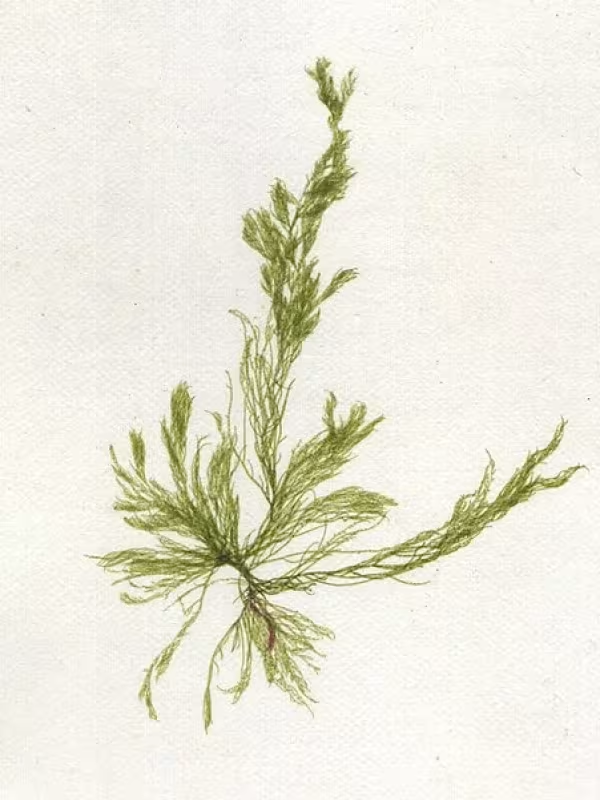
Description
Sowing dates
Cladophora prolifera is a multicellular green alga belonging to the Cladophoraceae family. Unlike land crops, it does not require traditional sowing, but rather relies on vegetative propagation and the development of zoospores within an aquatic environment.
Cultivation involves preparing suitable substrates where the thalli can anchor and proliferate. Creating the right environment for initial colonization is essential for establishing a productive culture.
Optimal growth conditions occur when water temperatures are maintained between 15°C and 25°C. Stable thermal conditions are crucial for preventing metabolic stress and ensuring continuous growth cycles.
Light availability is a primary factor influencing the developmental stages of this macroalga. Industrial systems must be designed to provide uniform illumination to all parts of the biomass.
Cultivation is conducted in controlled aquaculture systems, such as flow-through tanks or specialized submerged mesh structures, allowing for precise control over the developmental environment.
Growing requirements
Cladophora prolifera requires constant water circulation to ensure the delivery of essential nutrients to the thalli. Stagnant water can lead to oxygen depletion and the accumulation of waste products, which are detrimental to growth.
Chemical parameters, particularly the concentration of nitrogen and phosphorus, must be strictly monitored. Imbalances in these nutrients can lead to stunted growth or the proliferation of unwanted competitors.
High water clarity is mandatory, as turbidity significantly reduces the photosynthetic efficiency of the algae. Maintenance of light penetration is a top priority in any cultivation system.
The salinity levels must reflect the natural habitat of the species. Any deviation from these chemical requirements can severely impair the biological functions and quality of the final biomass.
Aeration is critical to maintain gas exchange efficiency. An adequate supply of dissolved carbon dioxide is essential to drive the photosynthesis process required for biomass accumulation.
Yield
The yield of Cladophora prolifera is typically measured by dry weight per unit of area or volume. Intensive cultivation techniques allow for high productivity levels compared to wild harvesting.
Under optimal conditions, the biomass is capable of doubling in mass every 7 to 14 days, depending on nutrient availability and light intensity. This rapid growth makes it an efficient species for biomass production.
Yield stability is heavily dependent on the efficiency of the water circulation and nutrient dosing systems. Managed systems consistently outperform natural beach-cast collections in terms of volume and quality.
Periodic monitoring allows farmers to adjust growth parameters, which in turn optimizes the yield potential. Regular thinning of the crop is necessary to maintain high growth rates throughout the season.
Evaluation of the harvest includes testing the chemical profile of the biomass, which is vital for assessing its potential in the pharmaceutical or feed industries.
Main diseases and pests
The most significant threat to a Cladophora prolifera culture is the competition from epiphytic algae. These invaders quickly cover the surface, blocking light and nutrient uptake for the primary crop.
Bacterial pathogens thrive if the water temperature or organic load is not managed correctly. Infections can lead to the rapid decay of the thalli, resulting in total loss of the harvest.
Small marine invertebrates act as herbivores, grazing on the algae and causing mechanical damage that leaves the tissues vulnerable to secondary fungal or bacterial infections.
Environmental fluctuations, including extreme temperature spikes or changes in salinity, can cause physiological shock, leading to the bleaching and eventual death of the algal colony.
- Bacterial rot due to poor water circulation.
- Competition from invasive opportunistic algal species.
- Mechanical destruction caused by strong water currents.
- Heavy metal accumulation from contaminated water sources.
Harvesting
Harvesting Cladophora prolifera is performed using mechanical filtration or specialized collection nets designed to remove the biomass without damaging the underlying structure of the colony.
Post-harvest processing involves thorough cleaning to remove debris and epiphytes, ensuring that the raw material meets industrial quality standards for purity and composition.
Immediate preservation is necessary after collection. Drying or freezing are the preferred methods to lock in the biological compounds and prevent the degradation of organic matter.
A rotational harvest strategy is often employed, where only a portion of the colony is removed at any given time, allowing the remaining biomass to recover and continue producing.
Transport of the raw product must occur under temperature-controlled conditions to preserve the integrity of the bioactive molecules, particularly when the biomass is intended for high-value applications.