
Albizia chinensis
Albizia chinensis (Osbeck) Merr.
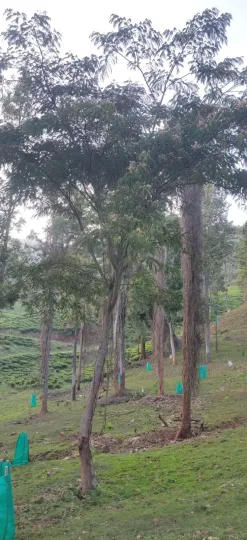
Description
Growing requirements
Albizia chinensis is a fast-growing, deciduous tree belonging to the Fabaceae (Legume) family. It is widely recognized for its rapid biomass accumulation, reaching heights of up to 30 meters, and is often employed in reforestation projects across its native range in Asia.
This species thrives in humid tropical and subtropical climates. It prefers environments with high rainfall and stable, warm temperatures, showing limited tolerance for frost and cold, particularly during the early stages of plant development.
Regarding soil conditions, it prefers deep, well-drained loamy soils. One of its most significant agronomic features is its ability to fix atmospheric nitrogen via root nodules, which helps enhance soil fertility and makes it suitable for growth in nutrient-poor soils.
The tree is strictly heliophilous, requiring full sunlight exposure to maintain rapid growth rates and achieve optimal crown structure. Insufficient light leads to stunted development and reduced timber quality, which is essential for commercial silviculture.
The tree is versatile in its economic use, providing timber for light construction, furniture, and paper pulp. Additionally, it is highly valued in agroforestry as a shade tree for coffee and tea plantations, while simultaneously acting as a green manure source.
Main diseases and pests
Albizia chinensis can be susceptible to various root rot pathogens, especially when grown in soils with poor drainage. These fungal issues are often triggered by waterlogging, which hampers root respiration and encourages decay.
Pest management is focused on controlling lepidopteran larvae and various borers that may infest the stems of younger trees. Integrated pest management strategies are recommended to minimize chemical input in forest plantations.