
Albizia lebbeck
Albizia lebbeck (L.) Benth.
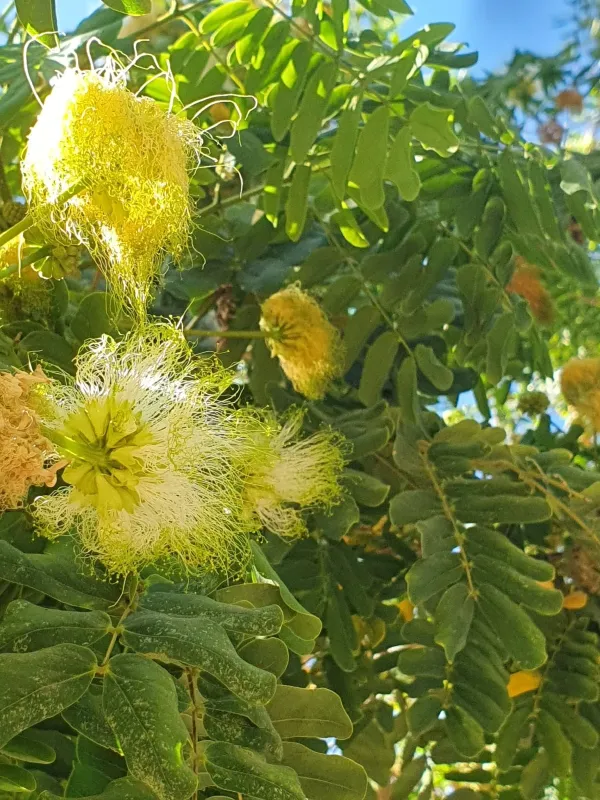
Description
Growing requirements
Albizia lebbeck, a member of the Fabaceae family, is a fast-growing deciduous tree reaching heights of up to 25 meters in favorable tropical conditions.
Native to tropical regions of Asia and northern Australia, the species has been introduced globally to tropical and subtropical zones for reforestation and timber production.
The tree is highly adaptable to various environmental conditions, exhibiting remarkable drought tolerance and the ability to thrive in poor, saline, or alkaline soil types.
It prefers warm, frost-free climates and thrives in areas receiving between 400 mm and 2500 mm of annual rainfall, though it remains productive even in regions with distinct dry seasons.
Beyond its high-quality timber, known for durability and attractive grain, the species is widely valued for its nitrogen-fixing capabilities and as a high-protein fodder source for livestock.
Main diseases and pests
The tree is susceptible to several insect pests, including defoliators and sap-sucking insects like aphids, which can stunt the development of younger plants.
Wood-boring beetles present a major challenge, as their larvae tunnel into the trunk and branches, severely compromising the structural integrity and timber value of the tree.
Root rot diseases caused by soil-borne fungi such as Ganoderma occur primarily in waterlogged soils, leading to rapid decline or death of the trees.
Powdery mildew and various leaf spot fungi can affect foliage density, especially in nursery settings where humidity levels remain consistently high without adequate airflow.
Effective management strategies should focus on site selection to ensure good drainage and implementing regular health monitoring to detect early signs of infestation or infection.