
Chimonobambusa marmorea
Chimonobambusa marmorea
Description
Growing requirements
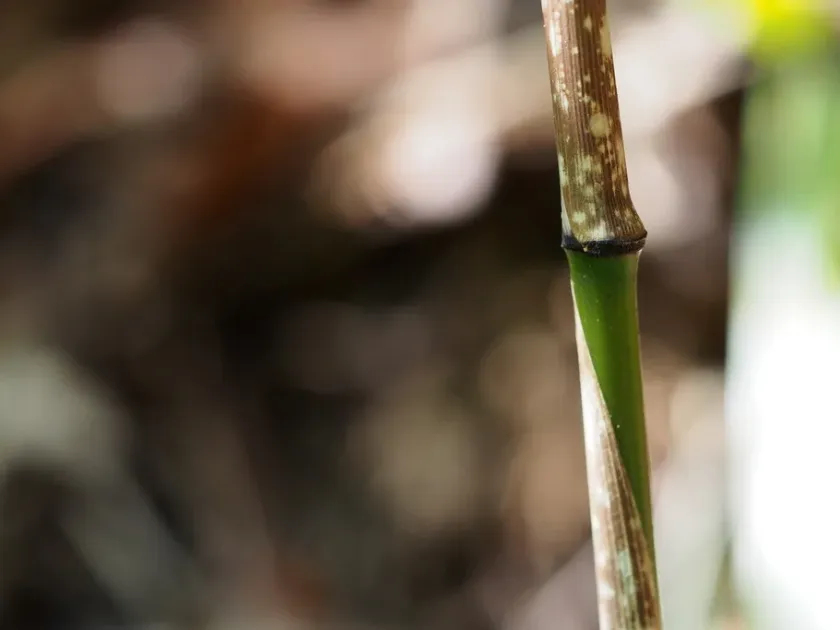
Chimonobambusa marmorea, commonly known as marble bamboo, is a perennial evergreen plant belonging to the grass family Poaceae. It is distinguished by its unique culms, which develop a dark, mottled, marble-like appearance as the plant matures.
Native to East Asia, particularly China and Japan, this species thrives in humid subtropical environments. It prefers regions with mild winters and consistent moisture levels throughout the growing season to maintain its deep green foliage.
The plant demands rich, well-draining, and slightly acidic to neutral soils. Ample organic matter should be incorporated into the planting site to ensure healthy rhizome expansion and robust culm development during the spring months.
Light requirements for this bamboo include partial shade or filtered sunlight. While it can tolerate brighter light, intense direct sun without sufficient humidity may cause leaf scorch and reduce the overall vigor of the bamboo colony.
Maintenance techniques include consistent irrigation during dry spells and the application of mulch to protect the shallow root system. Due to its vigorous growth habit, installing a root barrier is highly recommended to contain its spread in garden settings.
Harvesting
The primary utility of Chimonobambusa marmorea is ornamental. It is widely used in landscape design to create dense screens, hedges, or focal points in woodland gardens, thanks to its striking culm coloration and architectural structure.
Harvesting culms for decorative craftsmanship is possible once the plants reach maturity, typically after several years of establishment. The best time for collection is during late winter or early spring before the new growth cycle begins.
Cut culms should be processed by stripping away lateral branches and allowing them to dry in a shaded, well-ventilated area. Controlled drying prevents the wood from warping or splitting, preserving the characteristic marble pattern of the surface.
The material is valued by artisans for making lightweight indoor decor, small furniture pieces, and garden accessories. Its durability and unique texture make it a premium choice for traditional Japanese-style craft projects.
Annual maintenance pruning is essential to remove dead or congested culms, which ensures the health of the clump and promotes the emergence of new, healthy shoots, thereby maintaining the ornamental quality of the planting.