
Pipsissewa
Chimaphila umbellata
Description
Growing requirements
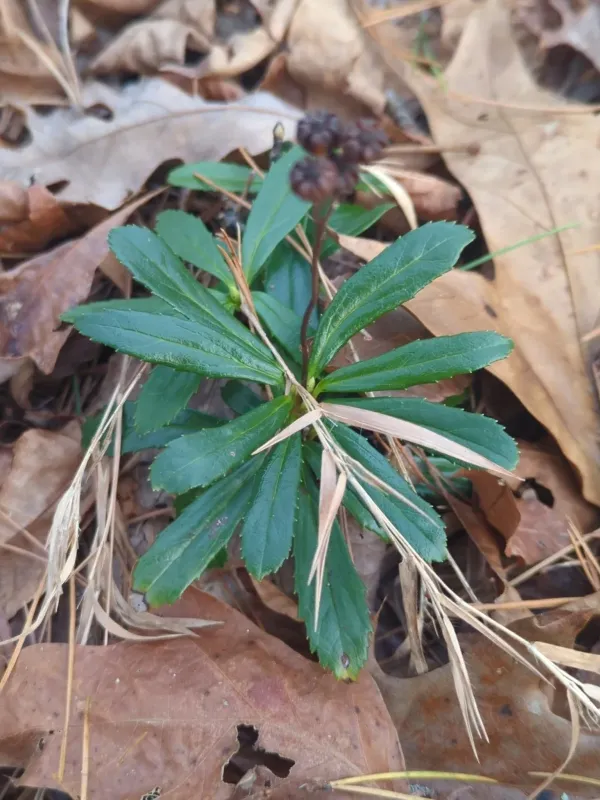
Pipsissewa (Chimaphila umbellata) is a slow-growing evergreen perennial belonging to the Ericaceae family. Known for its leathery leaves and fragrant flowers, it thrives primarily in dry, coniferous woodlands where it forms colonies through its creeping rhizomes.
The cultural requirements for this plant are quite specific. It demands acidic, sandy soils rich in organic matter. A substrate mimicking forest floor conditions, enriched with decomposed pine needles, is essential for its survival and growth.
Light management is crucial, as Pipsissewa is shade-tolerant. It performs best in partial shade, mimicking the filtered light found under dense canopy trees. Excessive exposure to direct sunlight results in scorched foliage and stunted growth.
A biological necessity for this species is the symbiotic relationship with mycorrhizal fungi. Without this association, the plant cannot efficiently absorb nutrients, making traditional fertilization ineffective and potentially harmful to its delicate root system.
The plant is highly cold-hardy, well-adapted to the harsh winters of its native temperate and boreal zones. It requires a distinct dormancy period to maintain its biological cycle, allowing it to withstand freezing conditions.
Harvesting
Historically and commercially, Pipsissewa is harvested for its medicinal properties. The plant contains various compounds, including arbutin and methyl salicylate, which are utilized for their antiseptic, tonic, and diuretic effects.
Harvesting should be done during the flowering season, typically in early to mid-summer. Given the slow growth rate of the plant, sustainable harvesting practices are vital to prevent the depletion of populations in natural habitats.
After collection, the plant material must be dried promptly. Optimal results are achieved using well-ventilated drying racks in a temperature-controlled environment, preventing the loss of volatile compounds due to excessive heat.
Storage requires cool, dark, and dry conditions to maintain potency. Exposure to humidity will rapidly degrade the quality of the raw material, rendering it unsuitable for the intended medicinal applications.
Efforts to move toward controlled cultivation are increasing due to environmental concerns. Researchers are exploring ways to inoculate soils with native fungal cultures to support the successful establishment of nursery-grown Pipsissewa beds.