
Californian flowering quince
Chaenomeles x californica W. B. Clarke ex C. Weber
Description
Growing requirements
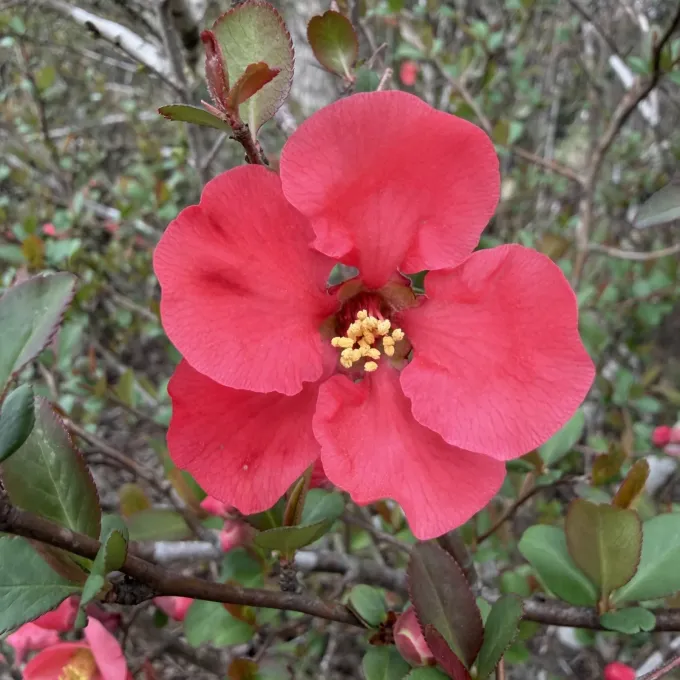
Californian flowering quince (Chaenomeles x californica) is a significant hybrid shrub belonging to the Rosaceae family. This botanical entity is a cross-breed, typically derived from various Japanese quince species, known for its vigorous growth and exceptional floral display.
The plant thrives in full sun, which is essential for maximizing flower production and fruit maturation. It requires deep, fertile, and well-drained soils; heavy clay soils should be amended with organic matter to improve aeration and prevent root rot associated with poor drainage.
Regarding climate, this hybrid is well-adapted to temperate regions. It displays strong hardiness but benefits from mulching around the root zone in colder areas to mitigate extreme temperature fluctuations during the dormant season.
Agrotechnical maintenance focuses primarily on structural pruning. To ensure high vigor, gardeners should remove dead or crossing branches immediately after the spring bloom, which also encourages the development of new flowering spurs for the following season.
The culinary utility of the fruit is significant; although rarely eaten raw due to extreme acidity and hardness, the fruits are highly prized in food processing. They serve as a key ingredient for jams, jellies, and traditional liqueurs, contributing a unique aromatic profile and high pectin content.
Main diseases and pests
Fire blight is one of the most critical diseases affecting this species. It manifests as a sudden wilting and blackening of the foliage and shoots; affected parts must be pruned back and destroyed to prevent the spread of the pathogen.
Scale insects and aphids are common pests that feed on the sap of the plant. Monitoring the stems and the undersides of leaves is crucial, and management strategies should include dormant oil sprays to target overwintering stages of these insects.
Powdery mildew can occur in stagnant, humid air conditions. Ensuring adequate spacing between plants and maintaining a clean growing environment significantly reduces the risk of fungal infections throughout the growing season.
Iron chlorosis is frequently observed in soils with high pH levels, leading to yellowing of leaves. This can be effectively corrected through the application of chelated iron supplements or by acidifying the soil using organic amendments.
Rodent damage, particularly to the bark of the lower stems, can be a problem in winter. Protective wire guards or repellents are recommended to prevent gnawing damage that can weaken or even kill the shrub during the cold months.