

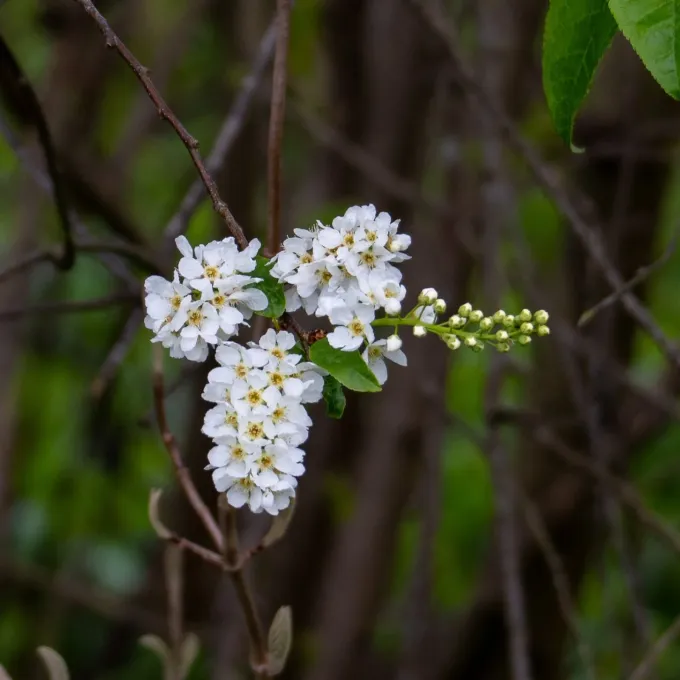
Description
Growing requirements
Bird cherry (Prunus padus L.) is a deciduous tree or shrub belonging to the Rosaceae family, native to northern Eurasia.
It thrives in moist, temperate climates and is naturally found in riparian forests, mountain slopes, and thickets, demonstrating great ecological plasticity.
The tree prefers deep, rich soils with a neutral pH, although it can adapt to various soil types provided there is sufficient moisture.
Cultivation requires regular pruning to maintain a balanced canopy shape and to remove deadwood, ensuring the tree remains vigorous and healthy.
Propagation is typically achieved through seeds or vegetative methods such as suckers or cuttings, allowing for rapid establishment in orchards or landscapes.
Yield
The fruits of the bird cherry are rich in tannins and vitamins, making them a significant resource for the food industry and traditional herbal medicine.
Beyond its edible properties, the tree is highly valued in timber production for its fine-grained, durable wood, which is often used in woodturning.
Its ecological role as a source of nectar makes it an essential component for apiaries, significantly contributing to honey production in spring.
The plant is widely used in landscape design for its showy white flowers and its ability to improve air quality through the release of phytoncides.
An established tree can provide a bountiful harvest, serving both as a local food source and as a botanical raw material for processing industries.
Main diseases and pests
Major pests affecting bird cherry include the aphid species Rhopalosiphum padi and various caterpillars that feed on leaves and young buds.
Pathogenic fungi, such as rusts and various spot diseases, pose a threat to leaf health, especially in damp and poorly ventilated conditions.
Integrated pest management strategies should focus on preventive measures, including regular monitoring and the use of eco-friendly insecticidal sprays.
Maintaining proper tree spacing and avoiding overcrowding can help minimize the risk of spreading infections between individual trees.
- Remove and destroy fallen leaves to reduce pathogen spores.
- Apply dormant oil sprays to target overwintering pests.
- Ensure adequate nutrient supply to improve natural plant immunity.
Harvesting
The harvesting process should be executed when the fruit reaches full maturity, identifiable by its deep dark pigment and soft texture.
Fruits are usually harvested in racemes, which helps in maintaining the integrity of the fruit until it is processed or stored.
Post-harvest care involves rapid cooling or immediate drying, as fresh fruits are perishable and can degrade quickly at room temperature.
Large-scale processing often involves drying the fruits for use in baking or as infusions, as they lose their astringency during the heating process.
For culinary applications, proper handling and sorting are crucial to ensure that only ripe and unblemished fruits enter the production line.
Content graph
Connections · Bird cherry
Most often together:
Marketplace
Products · 8


