
Centrosema pubescens
Centrosema pubescens Benth.
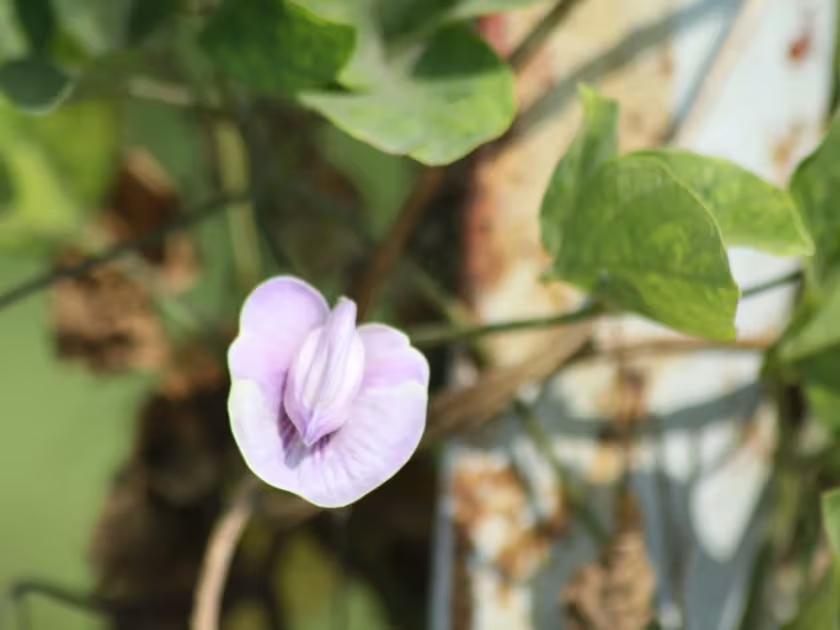
Description
Sowing dates
Sowing of Centrosema pubescens should be carried out at the beginning of the rainy season when soil moisture is sufficient to support rapid germination. The recommended seeding depth is between 1 and 3 centimeters depending on soil texture.
To improve germination rates, scarification of seeds is highly recommended due to the hard, waxy seed coat that prevents moisture uptake. A seeding rate of 3 to 5 kilograms per hectare is generally sufficient for pure stands.
When used in pasture mixtures, it is often sown in rows or individual spots, allowing the seedlings to establish a strong root system before facing competition from grasses. This method is particularly effective in mixed cropping systems.
The soil temperature during planting should be consistently warm, as this crop is tropical and highly sensitive to cold soil conditions. Optimal growth and establishment occur when soil temperatures are above 20°C.
Rolling the field after sowing is beneficial to ensure good seed-to-soil contact, which is essential for uniform emergence in regions where rainfall patterns might be slightly erratic at the start of the season.
Growing requirements
Centrosema pubescens is a member of the Fabaceae family, valued for its ability to fix atmospheric nitrogen through a symbiotic relationship with rhizobia bacteria. This makes it an excellent choice for sustainable pasture management.
The plant performs best in areas with an annual rainfall between 1000 and 1500 mm. Despite its tropical origin, it possesses a deep taproot system that provides a moderate level of tolerance to short dry spells.
It is well-adapted to a wide range of soil types, including acidic and slightly saline soils, though it thrives best in well-drained loams. It does not tolerate waterlogging, which can quickly lead to root decay.
Sunlight is a critical requirement for this crop. In shaded conditions, its growth rate, flowering, and nitrogen fixation capacity are significantly reduced, making it less productive when planted under dense forest canopies.
Inoculation with specific rhizobial strains is essential when establishing the crop on land where it has not been previously grown. Proper inoculation ensures efficient nitrogen fixation and robust plant health from the early stages.
Yield
The biomass yield of Centrosema pubescens can range from 10 to 25 tonnes of green matter per hectare annually. Productivity is heavily influenced by soil fertility levels and the frequency of grazing or cutting.
The nutritional profile of the plant is excellent, with dry matter crude protein levels typically ranging from 18% to 22%. This high protein content makes it an ideal supplement for livestock grazing in tropical regions.
When harvested for hay, farmers can expect a yield of 5 to 8 tonnes of dry matter per hectare. The crop has good regrowth potential if managed properly, maintaining its forage value throughout the vegetative phase.
As a green manure crop, it can fix significant amounts of nitrogen, potentially adding up to 200 kg of nitrogen per hectare back into the soil. This drastically improves the yields of subsequent crops in the rotation.
To maintain high productivity, rotational grazing is necessary. Continuous, heavy grazing pressure will deplete the plant's root reserves and eventually lead to its disappearance from the pasture composition.
Main diseases and pests
While generally resilient, Centrosema pubescens can be susceptible to fungal diseases such as anthracnose and Rhizoctonia root rot, especially in environments with high humidity and poor air circulation.
Insect pests, particularly leaf-eating larvae such as certain species of armyworms, can cause significant damage to the canopy. Regular monitoring is necessary to prevent extensive leaf area loss during population outbreaks.
Virus infections, often spread by aphid vectors, can cause mosaic patterns on leaves. Control strategies focus on managing weed populations in the surrounding area that may serve as alternate hosts for these viruses.
Nematodes can be a problem in sandy soils, potentially stunting growth and reducing the plant's efficiency. Crop rotation with non-host species is the most effective management strategy to minimize nematode populations.
Good agricultural practices, such as maintaining adequate plant spacing and ensuring proper soil drainage, are the most effective preventive measures against the majority of common pests and diseases.
Harvesting
Harvesting for hay should ideally take place during the early flowering stage to ensure the best balance between biomass quantity and protein quality. A cutting height of at least 10–15 cm is vital for plant recovery.
Seed production harvesting requires careful timing; pods should be collected when they turn brown but before they start to shatter. Mechanized harvesting can be tricky due to the plant's tendency to disperse seeds rapidly upon drying.
In grazing systems, the sward height should ideally be kept between 20 and 30 cm. This height provides enough leaf area for the plant to perform photosynthesis and recover quickly after being grazed by livestock.
During cooler periods or periods of reduced growth, the frequency of harvest or grazing must be adjusted. Increasing the rest period allows the plant to replenish its root starch reserves, ensuring longevity.
Once cut, the forage should be dried promptly in the field. Rapid drying minimizes leaf loss, which is critical because the leaves contain the highest concentration of proteins and minerals compared to the stems.