
Cassia leiandra
Cassia leiandra Benth.
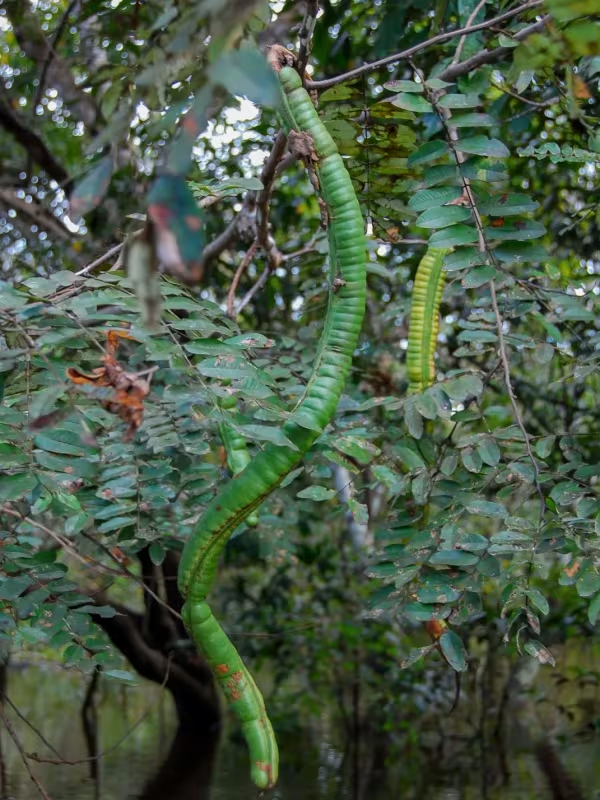
Description
Sowing dates
Propagation of Cassia leiandra is primarily achieved through seeds. Planting should ideally occur at the onset of the rainy season, when soil temperatures remain consistently between 25–30 degrees Celsius to promote rapid germination.
The seeds possess a hard seed coat, which necessitates mechanical or chemical scarification before planting. This process is essential to allow sufficient water absorption and ensure high emergence rates.
Seeds should be sown at a depth of 2–3 centimeters in well-drained, nutrient-rich potting mix. Nursery conditions are often preferred to ensure early protection of the delicate seedlings.
Weed control is critical during the initial developmental stages of the seedlings. Keeping the surrounding area free of competing vegetation ensures the plant receives maximum nutrients and sunlight.
Once the saplings reach a robust height of 30–40 centimeters, they are typically ready for transplanting into their final field locations, spaced appropriately to accommodate crown growth.
Growing requirements
Cassia leiandra, a member of the Fabaceae family, is a tropical tree native to South American regions. It thrives in humid environments that are consistently warm and devoid of severe frost.
The tree performs best in deep, well-drained loamy soils. It is highly sensitive to waterlogging, as standing water significantly increases the risk of root rot and other fungal diseases.
As a light-demanding species, it requires full sun exposure to maintain optimal canopy architecture and ensure consistent flowering. Shaded areas result in stunted growth and poor biomass production.
Adequate water supply is necessary, especially during the active growing season. The plant thrives under annual rainfall patterns ranging from 1500 to 2000 mm, supplemented by consistent air humidity.
Nutrient management involves applying organic fertilizers around the root zone, which enhances soil fertility and supports the symbiotic nitrogen-fixing processes characteristic of legumes.
Yield
The хозяйственное utility of Cassia leiandra is diverse, centering mainly on its dense and durable timber, which is highly prized in furniture manufacturing and architectural carpentry.
The fruits of this tree serve a secondary yet significant purpose in traditional medicine. Extracts from the pods are recognized for their medicinal properties, often utilized as natural laxatives and antiseptics.
The tree serves as an excellent nectar source for various pollinators, which contributes positively to the overall health and biodiversity of the agricultural ecosystem where it is planted.
Leaf litter and pruning residues are frequently used as green manure. When decomposed, they enrich the soil with nitrogen and organic matter, reducing the reliance on chemical fertilizers.
Commercial plantations become economically viable once the trees reach maturity. Harvesting cycles for timber are typically planned on a 7–10 year basis depending on the management intensity.
Main diseases and pests
Fungal pathogens such as root rot represent the primary threat to Cassia leiandra, particularly in plantations where soil drainage is inadequate or atmospheric humidity remains too high.
Seed-boring insects, including various weevil species, frequently target the pods. These pests can significantly reduce seed viability and the pharmaceutical value of the harvested crop.
Aphids and whiteflies can cause issues in younger trees or nursery settings. These pests extract plant sap and promote the growth of sooty mold, which inhibits photosynthesis.
Integrated pest management strategies, including the use of biological control agents and regular sanitary pruning, are recommended to protect the health of the trees without excessive chemical use.
Regular field monitoring is essential to detect signs of infestation or infection early. Removing and destroying affected plant parts prevents the disease from spreading throughout the grove.