
Cassia grandis
Cassia grandis L. f.
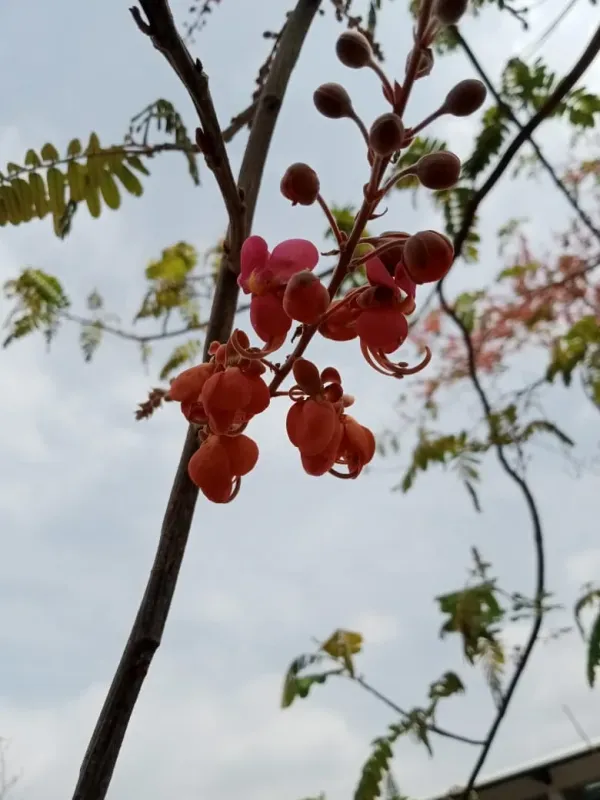
Description
Sowing dates
Propagation of Cassia grandis is primarily achieved through seeds. Because the seeds possess a very hard seed coat, scarification is essential to ensure uniform and efficient germination rates.
Seeds should be sown in a well-draining, sandy loam medium. Maintaining a consistent temperature between 25 and 28 degrees Celsius is critical for the activation of the embryo and initial seedling development.
Once the seedlings develop their first true leaves, they should be carefully transplanted into individual containers. The species is sensitive to root disturbance, so using peat pots or similar degradable containers can facilitate successful establishment.
Field planting should only occur after the risk of cold snaps has passed and soil temperatures have stabilized. In its native tropical range, the beginning of the rainy season provides the ideal conditions for planting.
When establishing a plantation or ornamental grove, a spacing of 6 to 8 meters between individual trees is recommended to accommodate the wide, spreading canopy characteristic of mature specimens.
Growing requirements
Cassia grandis, a member of the Fabaceae family, is a deciduous tree that can grow up to 30 meters tall. It is widely recognized for its spectacular, dense clusters of pink flowers that emerge during the dry season.
This species is strictly tropical, requiring full sun exposure and a frost-free environment to thrive. Optimal development occurs in areas with high annual temperatures and distinct light cycles.
The tree thrives in fertile, well-draining soils with a neutral or slightly acidic pH. While it is adaptable to various soil types, excessive clay content that retains water can lead to root failure.
Water management is vital; while the tree exhibits some drought tolerance once established, regular irrigation during the initial growth phase is necessary to support robust branching.
Formative pruning during the early years is advisable to establish a strong central leader and structural integrity, preventing wind damage to the heavy, spreading branches later in life.
Yield
The economic utility of Cassia grandis is multifaceted, ranging from urban landscaping to its traditional role in herbal medicine. The tree produces long, woody pods that can reach lengths of up to 60 centimeters.
The pulp inside the mature pods is highly valued in traditional medicine for its mild laxative properties and is often utilized as a natural pharmaceutical ingredient.
Although not a primary source of commercial timber, the wood of Cassia grandis is dense and durable, suitable for high-quality carpentry, decorative woodwork, and small-scale construction projects.
The tree contributes to soil health through symbiotic nitrogen fixation, a characteristic shared by most legumes, which improves the nutrient profile of the surrounding soil environment.
Effective yield of pods depends on the age and vigor of the tree. Consistent, high-quality production typically begins after 5 to 7 years of growth under optimal environmental conditions.
Main diseases and pests
The most common threat to Cassia grandis is root rot, triggered by poor drainage and waterlogging. Prevention relies on site selection and ensuring soil permeability before planting.
Pests such as mealybugs, aphids, and various scale insects may attack the foliage and new shoots. Integrated pest management strategies, including the use of systemic insecticides, are effective in controlling outbreaks.
Leaf-eating caterpillars can cause significant defoliation if left unchecked. Early detection through regular monitoring of the canopy is essential to minimize the damage to the tree's photosynthetic capability.
Nematodes can pose a challenge in sandy soils, potentially stunting the growth of young trees. Using certified, healthy nursery stock is the most effective preventative measure against soil-borne pathogens.
Micronutrient deficiencies, particularly iron or magnesium, can manifest as leaf chlorosis. Foliar applications of chelated minerals are often sufficient to restore the health and vigor of the foliage.