
Bluebeard
Caryopteris hybrids
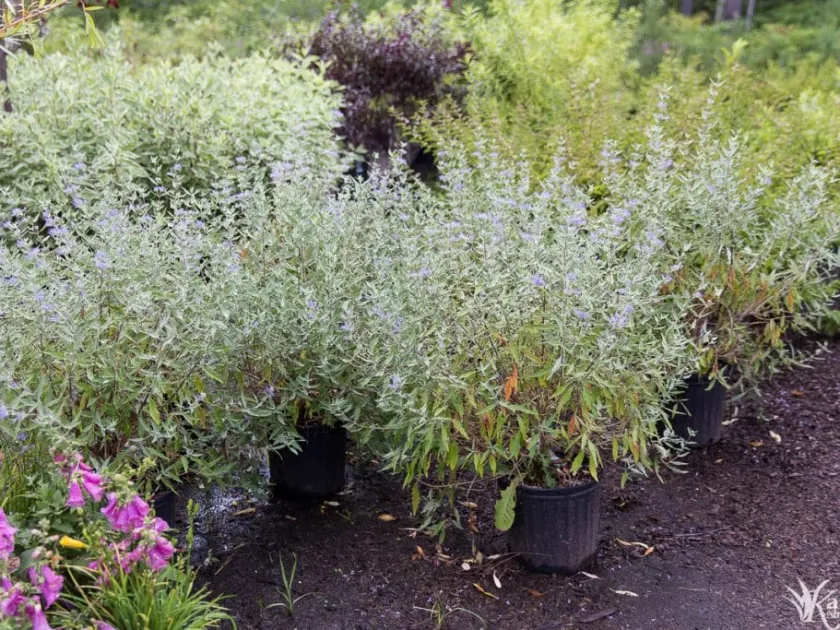
Description
Growing requirements
Caryopteris x clandonensis, commonly known as Bluebeard, is a popular hybrid deciduous shrub belonging to the Lamiaceae family. This plant is a hybrid cross between C. incana and C. mongolica, developed for its cold hardiness and striking late-summer blue blossoms.
The plant thrives in well-drained, sandy, or loamy soil with a neutral to slightly alkaline pH. Drainage is the most critical factor for successful cultivation; stagnant water in the root zone quickly leads to physiological stress and subsequent root decay.
Full sun is essential for the healthy growth and high floral density of this species. In shaded environments, the stems tend to grow weak and leggy, and the plant's ability to produce its characteristic blue flowers is significantly diminished throughout the season.
In terms of climatic adaptation, this shrub is moderately drought-tolerant once established but requires consistent irrigation during its initial growth stages. It performs best in temperate climates where it can be protected from extremely harsh, drying winter winds.
Proper agronomic maintenance includes drastic spring pruning. It is recommended to cut back the previous year's stems to within a few inches of the ground. This practice ensures vigorous new growth, as the plant blooms exclusively on the current season's wood.
Main diseases and pests
The main pathological threats involve fungal infections such as Pythium and Phytophthora root rot, which are triggered by poor drainage and excessive moisture levels. Mitigation strategies include soil amendments to improve aeration and avoiding over-irrigation.
Pests are generally manageable but may include aphids and spider mites during hot and dry spells. Integrated pest management, including the use of horticultural oils or soaps, is typically sufficient to control these infestations without harming beneficial insects.