
Mockernut hickory
Carya tomentosa (Poir.) Nutt.
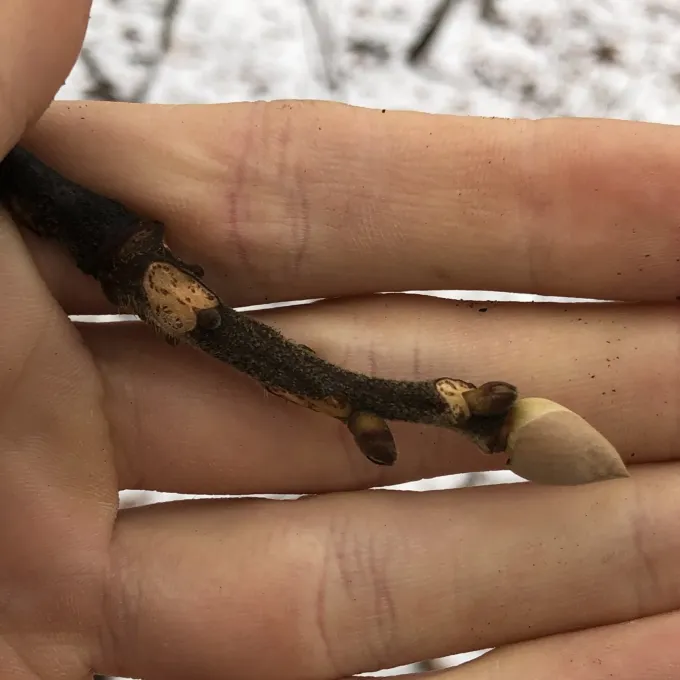
Description
Sowing dates
Seeds of the Mockernut hickory require a period of cold stratification lasting between 90 and 120 days to successfully break seed dormancy and ensure high germination rates after sowing.
Planting is best performed in the autumn, allowing the seeds to undergo natural winter conditions, or in the spring using pre-stratified seeds stored in moist conditions at cool temperatures.
The seeds should be planted at a depth of 5 to 8 centimeters, which provides adequate protection against predators and prevents the sensitive young roots from drying out during the initial germination phase.
The initial growth phase is dedicated to establishing a deep taproot, which is a characteristic feature of Carya species, necessitating a relatively long period for the plant to emerge above ground.
Vegetative propagation techniques, such as grafting, are utilized in orchard settings to ensure that the offspring retain the superior fruit or growth characteristics of the parent tree.
Growing requirements
Mockernut hickory belongs to the Juglandaceae family and is native to the eastern United States, typically thriving in deep, well-drained, fertile loamy soils rich in organic matter.
The tree prefers a temperate climate with a long growing season, providing sufficient heat units for the nuts to reach full maturity before the arrival of autumn frosts.
Soil pH levels should ideally be neutral or slightly acidic. Proper soil drainage is essential for long-term health, as waterlogged conditions can lead to root system decay and poor development.
While mature trees exhibit moderate drought tolerance due to their extensive root systems, young saplings require consistent moisture during their early years to establish successfully.
Maintenance includes mulching around the base of the tree to retain soil moisture, suppress competing weed growth, and enrich the soil profile with decomposing organic materials over time.
Yield
Mockernut hickory trees are slow to reach maturity, typically requiring 10 to 15 years to start producing significant nut yields, which represents a long-term commitment for foresters and orchardists.
Productivity is often cyclic, with trees experiencing years of heavy production followed by intervals of lower yields, which is a strategic energy management mechanism for the tree.
The nuts are characterized by a very thick, hard shell that encloses a small but highly nutritious kernel rich in healthy fats and proteins, though they are somewhat difficult to extract.
Beyond the nut harvest, the species is highly valued for its hardwood timber, which is exceptionally dense, strong, and shock-resistant, making it a premium material for heavy-duty applications.
The wood is historically preferred for the manufacturing of tool handles, athletic equipment such as bats, and high-quality furniture that requires significant structural integrity.
Main diseases and pests
Common pathological issues include fungal infections such as anthracnose and various leaf spots, which tend to proliferate in conditions of high humidity or poor air circulation within the canopy.
Pest pressures primarily come from the hickory nut weevil, which can significantly damage the fruit, and various wood-boring beetles that target the trunks of stressed or declining trees.
Leaf-feeding insects can cause cosmetic and physiological stress, potentially reducing the tree's vigor and overall rate of growth if infestations become severe over successive seasons.
Regular sanitation, including the prompt removal of dead or diseased branches, is vital for maintaining tree health and reducing the inoculum density of fungal pathogens in the area.
Integrated pest management strategies should be applied to protect the tree while preserving local biodiversity and ensuring the safety of beneficial insects and natural ecosystem components.