
Shagbark hickory
Carya ovata (Mill.) K. Koch
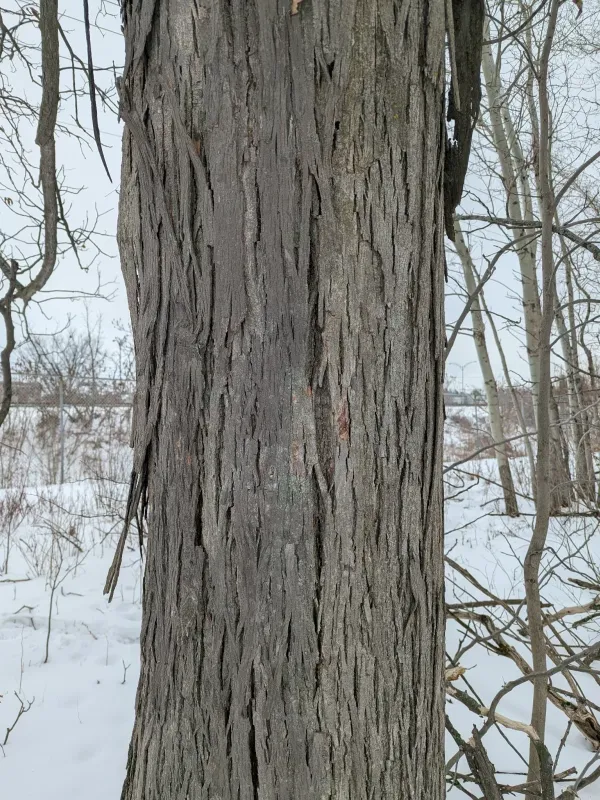
Description
Sowing dates
Propagating the Shagbark hickory (Carya ovata) is primarily done through seeds. Nuts require a period of cold stratification, typically lasting 90 to 120 days at temperatures just above freezing, to break dormancy and ensure successful germination.
Seeds should be sown in early spring into deep, well-draining soil at a depth of 5 to 7 centimeters. Protecting the sowing site from rodents is crucial, as they are highly attracted to the nutrient-rich nuts during the early stages of establishment.
In commercial nurseries, grafting is the preferred method for reproducing specific high-yielding cultivars. This ensures consistency in nut size, shell thickness, and kernel quality, which are often inconsistent when trees are grown from seed.
Transplanting requires extreme care due to the taproot system of the hickory. The roots are very sensitive to disturbance, so using deep-root containers or transplanting while the tree is very young is recommended to avoid long-term growth setbacks.
Given their large size at maturity, trees should be spaced at least 8–10 meters apart. This density allows for proper canopy development, essential for maximum photosynthetic efficiency and fruit production.
Growing requirements
The Shagbark hickory, a member of the Juglandaceae family, is native to the temperate forests of North America. It thrives in deep, fertile, and moist-to-well-drained loamy soils, which are ideal for its deep root system.
The species is notably winter-hardy, capable of withstanding harsh winters; however, it prefers sites that are not prone to late spring frosts, which can damage the tender new growth and developing flowers.
Full sun is a strict requirement for high nut yields. While young trees can tolerate partial shade, the productivity of a mature Shagbark hickory will significantly decline if the canopy is shaded by surrounding vegetation or forest cover.
Adequate moisture is essential, especially during the first few years. Once established, the trees are moderately drought-tolerant, but supplemental irrigation during prolonged dry spells in the summer can significantly improve nut fill and overall tree health.
The ideal soil pH for this species is between 6.0 and 7.5. Avoid planting in compacted or poorly drained clay soils, as the tree’s roots require significant oxygen levels to prevent root rot and ensure long-term vitality.
Yield
Shagbark hickory trees have a long lead time, typically starting to produce nuts in their second decade of life. Once mature, a healthy tree can produce significant annual harvests, although periodic bearing is a common natural cycle.
The nuts of Carya ovata are prized for their sweet, rich, and flavorful kernels. Although the shells are notoriously thick and hard, the superior quality of the kernel makes them highly sought after in specialty culinary markets.
Beyond nut production, the timber of the Shagbark hickory is legendary for its hardness, toughness, and shock resistance. It is highly valued in the production of tool handles, athletic equipment, and high-quality furniture.
Good orchard management, including thinning the canopy and applying balanced fertilization, can help mitigate the effects of alternate bearing, ensuring a more consistent supply of nuts from year to year.
Productivity is also improved by ensuring proper cross-pollination. Although some trees may be self-fertile, having different genetic individuals in the orchard typically results in a better nut set and higher quality crops.
Main diseases and pests
Fungal diseases such as leaf spots and anthracnose are the most common health issues for hickory, especially in humid environments. Maintaining good air circulation within the canopy is the best preventative strategy.
Insect pests, including the hickory nut weevil and various leaf-feeding caterpillars, can cause significant damage if left unchecked. Integrated Pest Management (IPM) practices, including monitoring and timely interventions, are recommended.
In addition to insects, wildlife such as squirrels and blue jays can be major competitors for the harvest. Physical barriers or automated scaring devices are often necessary to protect the nuts as they ripen on the tree.
Sanitation is a vital aspect of disease control. Clearing and destroying fallen leaves and diseased fruit helps to reduce the inoculum load for the following season, limiting the need for synthetic fungicides.
Regular inspections of the trunk and branches are necessary to detect signs of wood-boring beetles. Prompt removal of infested branches can prevent the spread of these insects to healthy parts of the orchard.
Harvesting
The harvest season typically begins in autumn. As the nuts ripen, the thick outer husk begins to split and turn brown, and the nuts eventually drop to the ground, signaling that they are ready for collection.
Frequent collection is necessary to keep the nuts in top condition. Leaving them on the ground for too long exposes them to excess moisture, soil contaminants, and animal damage, which can ruin the harvest quality.
Post-harvest, the nuts must be husked and dried. Proper drying in a well-ventilated area is essential to reduce the kernel moisture content to below 8%, preventing mold and extending the shelf life of the nuts.
Commercial growers use mechanical shakers to speed up the harvesting process, ensuring that the majority of the crop is collected in a short timeframe before environmental conditions compromise the nuts.
Stored in cool, dry conditions, Shagbark hickory nuts can remain fresh for up to 18 months. Proper grading and sorting based on size and shell integrity are essential steps to maximize the market value of the crop.