
Callerya eriantha
Callerya eriantha
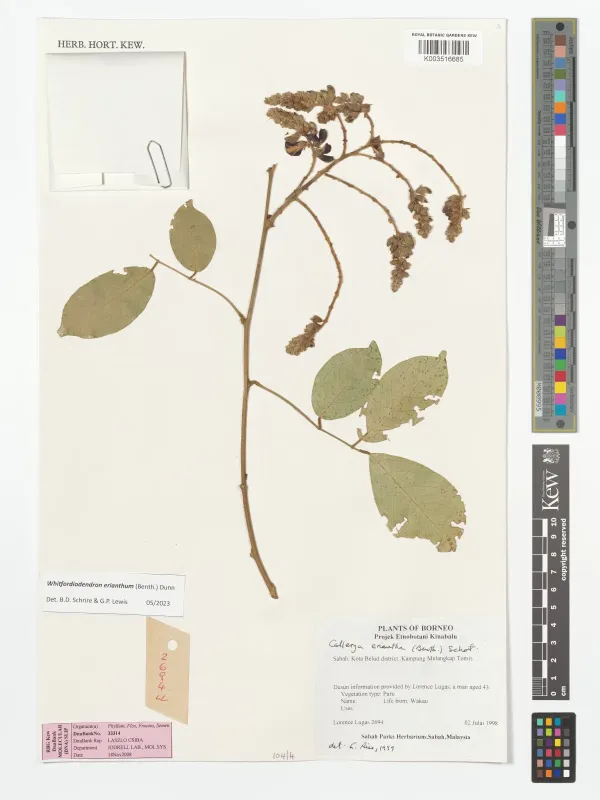
Description
Growing requirements
Callerya eriantha is a woody perennial vine belonging to the Fabaceae family. It is native to the tropical and subtropical regions of Southeast Asia, thriving in high-humidity habitats.
The plant requires a warm climate with consistent moisture levels. It is highly sensitive to frost, making it suitable primarily for regions where temperatures remain above freezing throughout the year.
For optimal growth, Callerya eriantha needs deep, fertile, and well-drained soils. While it tolerates various soil types, it performs best in slightly acidic to neutral substrates enriched with organic matter.
Cultural practices focus on structural management. As a climbing plant, it requires sturdy trellises or supports to sustain its heavy foliage. Regular pruning is necessary to manage vigor and encourage flowering.
Its primary use is in landscape architecture for covering vertical structures or acting as a windbreak in tropical garden settings. It also holds potential in ecological restoration due to its nitrogen-fixing properties.
Main diseases and pests
The main phytosanitary challenges include fungal pathogens such as leaf spot and mildew, which thrive in stagnant, humid environments. Maintaining adequate airflow around the plant is the best preventative measure.
Insect pests, including aphids and spider mites, are common during dry spells. These pests target succulent new growth, potentially stunting the development of the vine if left unchecked.
Root system issues, particularly collar rot, are prevalent if drainage is poor. Ensuring the planting site is elevated or properly tiled can prevent waterlogging, a critical factor for long-term survival.
Nutritional deficiencies, specifically nitrogen or magnesium deficiency, can be observed through leaf yellowing. Applying a balanced NPK fertilizer during the peak growing season helps maintain health.
Integrated pest management (IPM) is recommended to control populations of harmful insects without disrupting the local ecosystem. Monitoring for early signs of infection is essential for successful cultivation.