
Calendula suffruticosa
Calendula suffruticosa Vahl
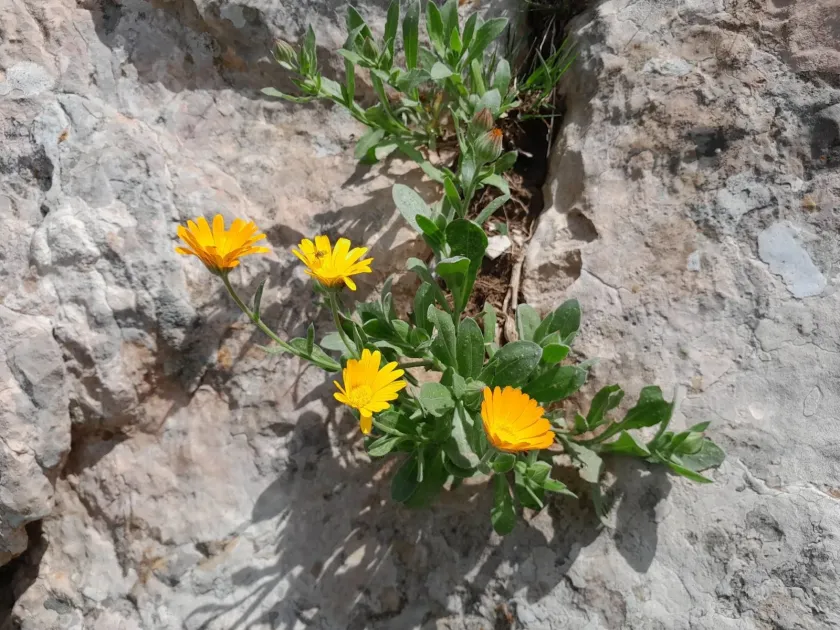
Description
Sowing dates
Calendula suffruticosa belongs to the Asteraceae family and is recognized for its bushy growth habit. It is widely cultivated as a versatile crop with both medicinal and ornamental value.
Sowing in the field typically begins in early spring once the soil temperature consistently stays above 10°C, ensuring rapid and uniform germination of the seeds.
The seeds are usually sown at a depth of 1.5 to 2 centimeters. Proper soil contact is essential for maintaining moisture levels necessary for successful seedling emergence.
For commercial production, precision sowing or transplanting seedlings is practiced. This allows for optimized plant spacing and more efficient field management.
Proper spacing, usually around 30 by 40 centimeters, is crucial to prevent overcrowding and to allow for adequate ventilation between individual plants.
Growing requirements
This species thrives in full sun exposure. Sunlight is the primary driver of growth and flower production, making site selection critical for maximizing yield.
The plant is highly adaptable to various soil types but performs best in well-drained, fertile soils with a pH ranging from neutral to slightly alkaline.
Although the plant exhibits significant drought tolerance, consistent moisture during the blooming stage is vital to produce high-quality flower heads.
Good soil structure and aeration are important for the health of the root system, as the plant is sensitive to waterlogging, which can trigger fungal issues.
Climatic requirements are moderate; the plant is known for its ability to withstand cool spring temperatures, making it a reliable crop for various temperate zones.
Main diseases and pests
Powdery mildew is a common challenge for Calendula crops, particularly in areas with high humidity or poor air circulation within the canopy.
Aphids can cause damage by feeding on tender shoot tips, potentially transmitting viral diseases and reducing the aesthetic and commercial value of the flowers.
Root rot and stem rot may occur if the soil is poorly drained or if the plants are set too close together, leading to excessive moisture retention.
Integrated pest management strategies are recommended, focusing on crop rotation and the removal of infected plants to maintain overall field hygiene.
Biological controls and selective application of treatments are often preferred to ensure the final product meets safety standards for medicinal use.
Harvesting
The harvesting process involves picking fully opened flower heads by hand or mechanical aids, ensuring that only the highest quality blooms are selected.
Regular harvesting is encouraged throughout the blooming season, as it promotes secondary growth and stimulates the plant to continue producing new flower buds.
Immediate processing is necessary after harvest. The collected flowers should be moved to a drying facility to prevent degradation of their volatile compounds.
Drying is conducted at controlled temperatures, usually under 40°C, to preserve the vibrant color and aromatic profile of the dried material.
Storage should take place in cool, dark, and dry conditions to maintain the integrity of the bioactive components until the product is ready for distribution.