
Cadaba termitaria
Cadaba termitaria
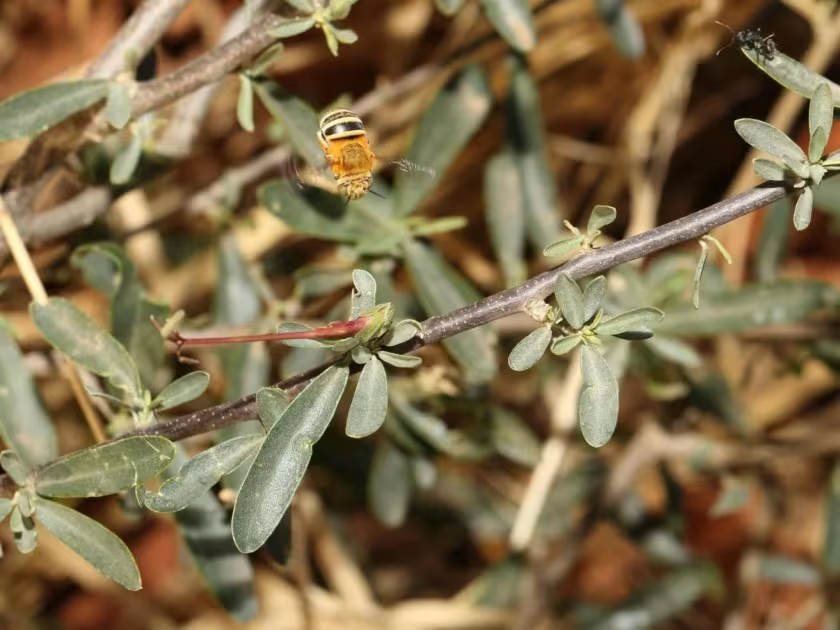
Description
Growing requirements
Cadaba termitaria is a resilient perennial shrub belonging to the Capparaceae family. It is notably adapted to harsh, semi-arid environments and is frequently observed growing in the vicinity of termite mounds, from which its specific name is derived.
The plant is indigenous to specific regions of tropical Africa, thriving in environments that are typically inhospitable to conventional agricultural crops. Its distribution is closely linked to geological and biological features that provide localized nutrient richness in otherwise poor soil conditions.
Regarding soil requirements, Cadaba termitaria demands exceptionally well-draining substrates. It thrives in sandy or gritty soils where the risk of waterlogging is minimal. The plant is highly tolerant of saline and alkaline soil conditions, which are common in its natural arid habitat.
The botanical structure of the shrub is characterized by a deep taproot system, which is essential for survival during prolonged droughts. The leaves are typically tough and leathery, an evolutionary trait designed to minimize water loss through transpiration in intense heat.
Agricultural use of this species is largely centered on desertification control and the stabilization of arid soils. It serves as an important ecological pioneer species, providing ground cover and essential forage for wildlife and hardy livestock in regions where biomass production is otherwise extremely limited.