
Cadaba farinosa
Cadaba farinosa
Description
Growing requirements
Cadaba farinosa is a perennial shrub belonging to the Capparaceae family. It is a highly specialized plant adapted to thrive in harsh, arid, and semi-arid environments where water availability is a limiting factor for most crops.
The plant originates from the dry regions of Africa and parts of the Arabian Peninsula and Asia. It has evolved to withstand extreme heat and high solar radiation, often growing in desert or semi-desert areas characterized by poor, sandy, or rocky soils.
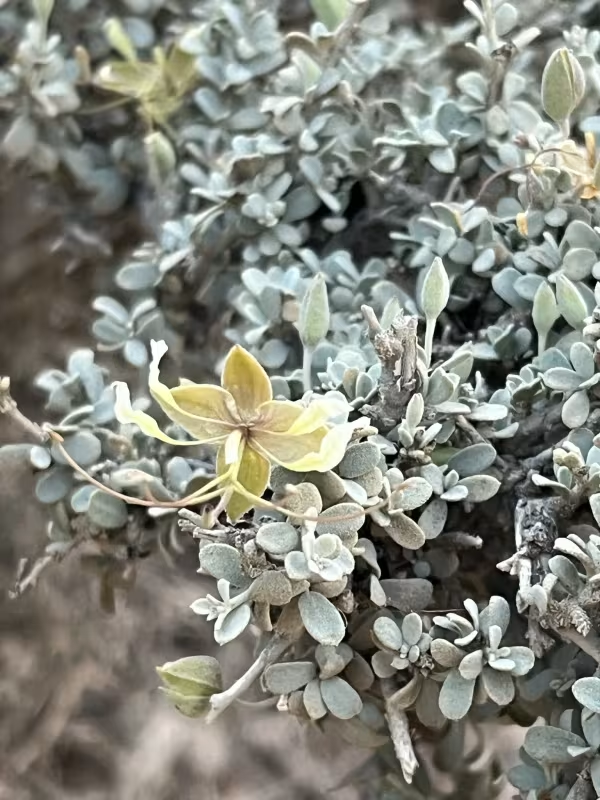
Botanically, it features small, glaucous leaves covered with a mealy (farinose) powder, which helps minimize water loss through transpiration. This adaptation allows the plant to remain green and productive even during prolonged droughts.
In terms of agricultural requirements, it demands well-drained soil and high levels of sunlight. It is intolerant of waterlogging, which can cause root rot; therefore, selecting appropriate terrain with natural drainage is essential for cultivation success.
Economically, Cadaba farinosa is primarily valued as browse for livestock, particularly goats and camels. It also plays a vital role in local ecosystems by providing shade and stabilizing soils against erosion in degraded desert landscapes.
Main diseases and pests
The primary threats to Cadaba farinosa include specific defoliating insects that can rapidly infest shrubs during favorable growing conditions, reducing biomass.
Fungal pathogens linked to soil moisture saturation represent a major risk, often leading to rapid decline in the health of the plant population.
Overgrazing by local herds remains the most significant threat to wild populations, often exceeding the shrub's regenerative capacity.
Parasitic plants, including various species of dodder (Cuscuta), frequently exploit the plant as a host, sapping its energy and reducing its nutritional value for livestock.
Management strategies should focus on sustainable grazing practices, periodic monitoring for signs of infestation, and ensuring that irrigation (if applied) is strictly controlled to avoid soil saturation.