
Cadaba kirkii
Cadaba kirkii
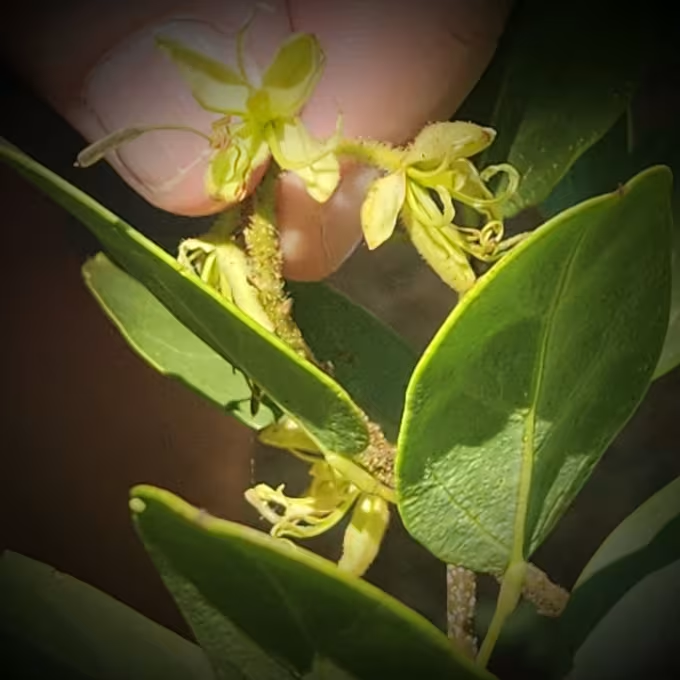
Description
Sowing dates
Propagation of Cadaba kirkii in its natural habitat occurs primarily through seeds, which require specific temperature conditions to break dormancy and germinate successfully.
In agricultural settings, seeds should be sown in a well-draining, lightweight substrate immediately after collection to ensure high viability rates.
The ideal time for planting is just before the onset of the rainy season, allowing the seedlings to establish a deep root system before the dry conditions return.
Seed scarification techniques are often employed to weaken the hard seed coat, which significantly speeds up the emergence of sprouts.
Consistent, yet moderate moisture must be provided during the initial weeks of development, gradually tapering off as the plant adapts to its environment.
Growing requirements
Cadaba kirkii belongs to the Capparaceae family and is recognized as a hardy, perennial shrub native to the arid landscapes of East Africa.
This species is exceptionally well-adapted to extreme heat and prolonged periods of drought, making it an excellent candidate for cultivation in arid zones.
The plant thrives in well-drained, sandy, or rocky soils, as it is highly sensitive to waterlogged conditions that can cause root decay.
Full sun exposure is essential for the healthy growth and development of the shrub, as it has evolved to dominate open, high-light environments.
Cadaba kirkii possesses a notable tolerance for saline soils, providing potential benefits for land reclamation efforts in degraded agricultural areas.
Yield
The primary economic value of Cadaba kirkii lies in its foliage, which serves as a vital source of fodder for livestock during harsh dry seasons.
The leaves and soft shoots of the plant remain succulent even when other vegetation has wilted, providing critical nutrition to grazing animals.
Overall biomass yield is heavily dependent on planting density and the implementation of periodic pruning, which encourages the growth of fresh, leafy shoots.
While large-scale commercial farming is limited, the plant is increasingly viewed as a valuable reserve crop for drought-prone regions.
Strategic management of harvesting ensures that the mother plant remains healthy and capable of sustained production over many years.
Main diseases and pests
The main biological threats to Cadaba kirkii include specialized insect pests, particularly caterpillars and beetles that feed on Capparaceae species.
In conditions of high humidity or soil water stagnation, the plant is susceptible to fungal infections that can damage the root system and stem base.
Uncontrolled overgrazing by wild animals or livestock can significantly stunt the growth of young shrubs, necessitating the use of protective fencing.
Competition from fast-growing weeds can be problematic in the seedling stage, requiring consistent maintenance until the shrub becomes established.
Early identification of pest infestations during the active growth season is crucial to prevent significant foliage loss and maintain vigor.
Harvesting
Harvesting is performed through the systematic pruning of younger branches, a method that promotes rejuvenation and denser foliage development.
It is recommended to harvest during the cool morning hours to maintain the moisture content and nutrient density of the collected biomass.
Harvested material can be consumed fresh or air-dried in shaded areas to create long-term fodder reserves for periods of extreme scarcity.
Proper pruning techniques are essential to ensure clean cuts, thereby minimizing the risk of disease entry into the vascular system of the plant.
The frequency of harvesting should be adjusted based on the plant's recovery rate, which is directly influenced by climatic conditions and water availability.