
Cadaba aphylla
Cadaba aphylla
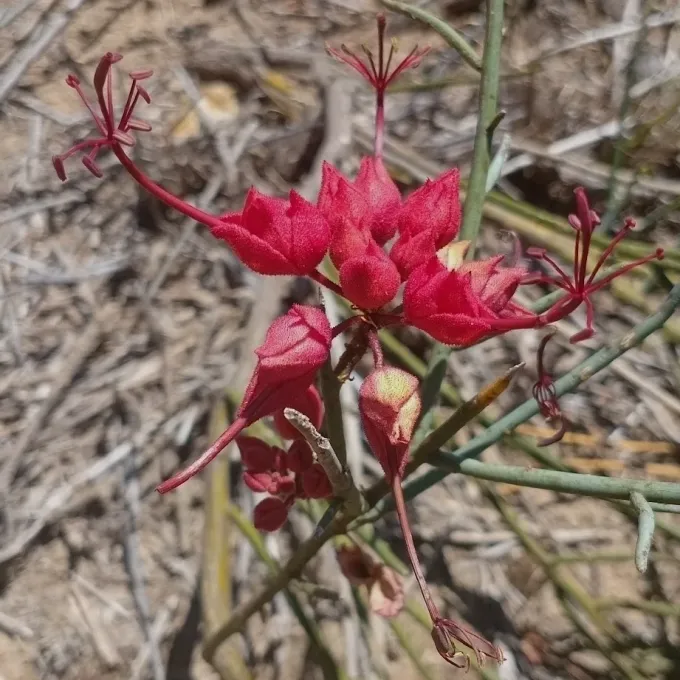
Description
Sowing dates
Cadaba aphylla is a member of the Capparaceae family. In its natural desert habitat, propagation primarily occurs through seeds that germinate following seasonal rainfall, which provides the necessary moisture for early development.
For controlled cultivation, seeds are sown in a substrate that mimics the sandy or rocky soils of arid environments. Proper drainage is essential to prevent water stagnation, which can lead to seedling rot in the early stages.
The optimal time for planting is immediately before the onset of the rainy season. This allows the developing root system to establish itself while moisture is available and temperatures are favorable for growth.
The plant grows very slowly during its establishment phase. Consistent weeding is required, as the slow-growing seedlings are easily outcompeted by more aggressive desert vegetation during the initial year.
Scarification techniques are often employed in nurseries to improve germination rates. This results in more uniform growth, which is critical for successful large-scale nursery production or land restoration projects.
Growing requirements
As a true xerophyte, Cadaba aphylla is perfectly adapted to extreme heat and prolonged drought. It thrives under direct sunlight and can withstand conditions that would be lethal to most conventional agricultural crops.
Well-aerated, sandy, or rocky soils are ideal for the plant's development. It is highly sensitive to waterlogged, heavy clay soils, which inhibit root respiration and can cause the plant to decay rapidly.
The species requires a consistently warm climate, as it has no tolerance for frost. Any significant drop in temperature can severely damage the green stems and significantly hinder subsequent growth patterns.
The plant is not nutrient-demanding but responds well to low-dose phosphate and potash fertilization during active growth cycles. Excessive nitrogen should be avoided as it leads to weak stems and increased susceptibility to pests.
Full sun exposure is a mandatory requirement for health and vitality. Shade-grown plants exhibit etiolation, producing thin, weak stems that lack the structural integrity required to survive harsh desert winds.
Yield
Cadaba aphylla is not grown for fruit or seed harvest in a traditional agricultural sense. Instead, its yield is measured by its capacity to provide browse for livestock and to protect topsoil from erosion.
The green, leafless stems serve as a vital source of emergency fodder for camels and goats. In years of severe drought, this shrub remains one of the few sources of green matter in the landscape.
Biomass production is highly dependent on annual precipitation levels. While growth can be slow, the plant's ability to maintain high nutritional quality during dry spells makes it a valuable asset for pastoralism.
As a soil-stabilizing agent, the plant provides significant ecological value. Its root system helps bind loose sands, preventing wind-driven soil loss and helping to maintain the integrity of rangelands.
The total harvestable biomass is restricted by the plant's specialized anatomy. Since photosynthesis occurs primarily in the stems, managing the plant for forage requires careful balancing to avoid over-defoliation.
Main diseases and pests
Common pests include various desert-adapted insects, particularly grasshoppers and beetles. These pests feed on the green stems, potentially causing significant stunted growth if infestation levels are high.
Fungal diseases are generally rare due to the arid environment. However, improper irrigation management or poor drainage can lead to root rot, which is often fatal and difficult to manage once established.
Overgrazing represents the primary threat to the natural spread and regeneration of the species. Livestock frequently target young, vulnerable shoots, preventing the plant from reaching reproductive maturity.
Pest damage to the vascular system can facilitate the entry of pathogens. Regular phytosanitary monitoring is recommended to ensure that localized outbreaks do not spread throughout the plantation.
Control of pests in natural ecosystems requires a delicate approach. Integrated pest management, focusing on biological controls rather than broad-spectrum insecticides, is preferred to preserve local biodiversity.