
Bunium pachypodum
Bunium pachypodum
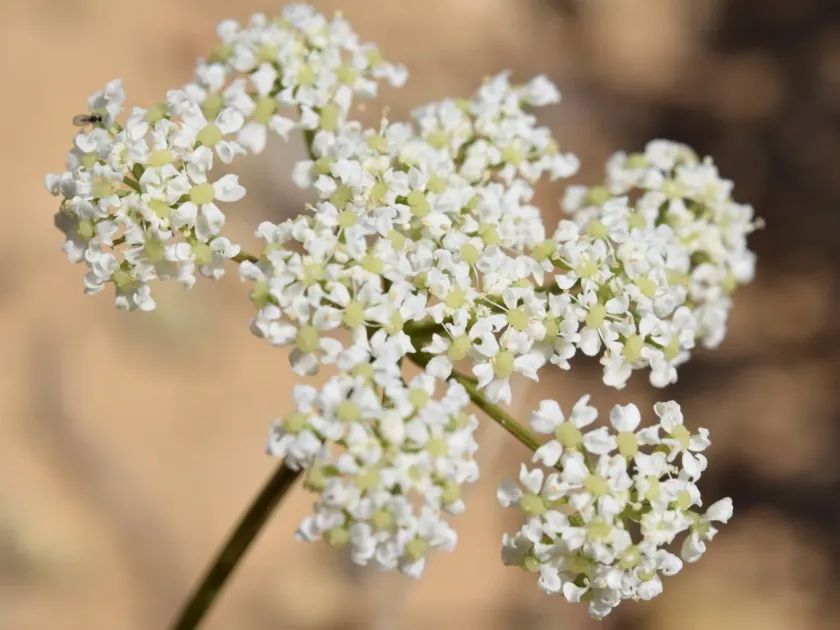
Description
Sowing dates
Bunium pachypodum belongs to the ephemeral group of plants, making precise sowing timing critical for successful germination. In natural habitats, seeds germinate after a winter dormancy period once soil moisture reaches optimal levels.
In agricultural practice, sowing is typically performed before winter to allow the seeds to undergo natural stratification. This process promotes uniform germination in spring as the upper soil layer warms to 5–10 degrees Celsius.
Spring sowing often results in significantly lower germination rates unless the seeds have been pre-treated with low temperatures for 30–45 days. Seeds should be sown at a depth of no more than 2–3 centimeters to ensure adequate oxygen availability.
For commercial plantations, maintaining row spacing of 30 to 45 centimeters is essential to facilitate maintenance and weed control during the early spring growing season.
The sowing density should be calculated based on the intended purpose, with higher densities typically applied when the primary objective is tuber production rather than seed harvesting.
Growing requirements
Bunium pachypodum is a perennial herbaceous plant belonging to the Apiaceae family, characterized by the development of a distinct tuberous root.
The crop prefers well-drained loamy or sandy soils with a neutral or slightly alkaline pH. Waterlogging is detrimental to the tuberous roots and can cause rapid decay.
Being a heliophilous plant, it requires open, well-lit locations for cultivation, avoiding areas shaded by taller crops or structures.
In terms of climate, the plant exhibits significant winter hardiness, allowing it to survive the severe winters typical of its natural range under a snow cover.
Successful growth requires moderate temperatures during the vegetation period; excessive heat and drought in late spring may cause the plant to enter early dormancy.
Yield
The yield of Bunium pachypodum depends on the biological age of the plantation, as the tubers reach their maximum weight during the third or fourth year of vegetation.
When proper agronomic practices are followed, the average yield varies from 5 to 10 quintals per hectare, which is influenced by plant density per unit area.
Essential oil accumulation within the plant tissues occurs gradually, peaking during the active flowering phase and the onset of seed maturation.
Irrigation during critical development stages, such as budding, can increase the mass of underground organs and improve the final output by 15–20%.
Seed harvesting requires careful handling, as seeds are prone to shedding when overripe, which can substantially decrease the marketable yield.
Main diseases and pests
Root rot is the primary threat to this crop, especially when triggered by excessive soil moisture during the spring thaw.
Pests, such as wireworms and larvae of various owlet moths, may damage the underground parts of the plant, leading to a decline in harvest quality.
To protect the crop, it is necessary to implement preventive soil fumigation and adhere to a strict crop rotation schedule, avoiding replanting on the same site for at least 4–5 years.
Powdery mildew can affect the aerial parts of the plant in conditions of high air humidity and poor ventilation within dense plantings.
Maintaining phytosanitary standards for planting material is a crucial measure to prevent the transmission of fungal diseases through seeds.
Harvesting
Harvesting the tubers is carried out during the plant's dormancy phase, when the above-ground foliage has completely died back, usually in the second half of summer.
Specialized brackets or potato harvesters are used to lift the tubers, adjusted to the specific depth at which the plant organs are located.
After excavation, the raw material must be cleaned of soil debris and dried in shaded, well-ventilated areas to prevent spoilage and mold development.
Seed harvesting should commence when the umbels acquire a brownish hue, ensuring the seeds are collected before they fall naturally from the fruits.
Storing the harvested crop requires cool temperatures (around 0–2 degrees Celsius) and moderate air humidity to preserve the volatile compounds and biological activity.