
Great Pignut
Bunium bulbocastanum
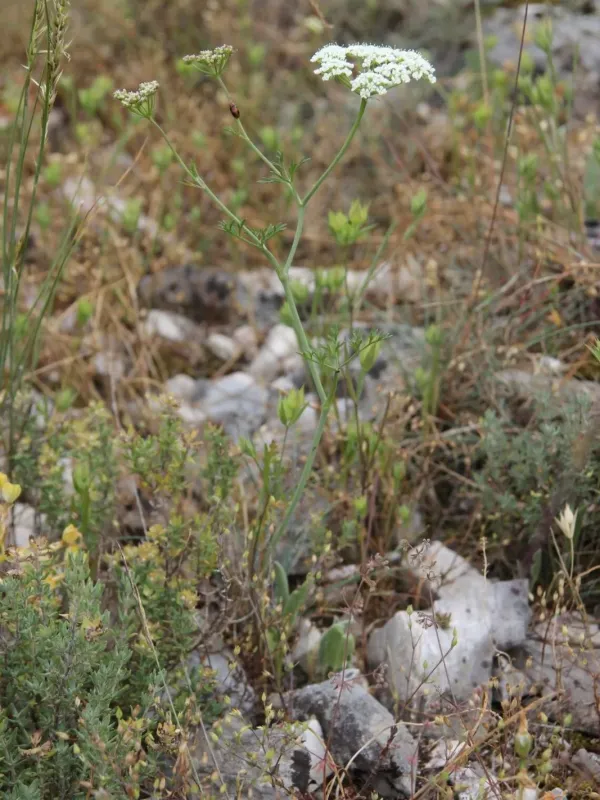
Description
Sowing dates
The Great Pignut (Bunium bulbocastanum) is a perennial herbaceous plant belonging to the Apiaceae family. It is native to Central and Southern Europe as well as Western Asia, where it has historically been gathered for its edible tuberous roots.
Sowing should ideally take place in the autumn, allowing the seeds to undergo natural stratification, which is essential for uniform germination in the spring. Spring sowing requires pre-chilling the seeds to mimic winter conditions.
Seeds should be planted at a depth of 1.5–2 centimeters in well-drained, loose soil. The soil structure must be fine-grained to ensure that the delicate root systems can expand without obstruction during the early stages of growth.
A row spacing of 30–40 centimeters is recommended for optimal management. This spacing allows for efficient weeding, which is crucial as the plant grows slowly during its first year and can be easily outcompeted by aggressive weeds.
Given the plant's slow establishment, it is recommended to keep the area clear of competing vegetation. Once established, the plant becomes more resilient and can reliably return each year, contributing to a stable multi-year harvest.
Growing requirements
Successful cultivation requires sunny locations with sandy or loamy soils. Excellent drainage is non-negotiable, as waterlogged conditions quickly promote rot in the tuberous roots, leading to total crop loss.
The crop thrives in temperate climates and demonstrates good winter hardiness. The ideal soil pH ranges from 6.5 to 7.5; acidic soils should be amended with lime to ensure the plant can properly absorb available nutrients.
Regular cultivation of the soil surface between rows is necessary to prevent compaction and control weeds. The plant benefits from moderate moisture during the spring but requires drier conditions as it approaches maturity.
Organic matter in the form of well-rotted compost provides essential nutrients for growth. Mineral supplementation, specifically high-potassium fertilizers, supports the development of healthy, dense tubers during the growing season.
Avoid planting in areas previously used for other Apiaceae family members, such as carrots or parsnips, to prevent the buildup of soil-borne pathogens. Proper crop rotation is the key to maintaining soil health and preventing disease.
Yield
The primary economic use of the Great Pignut lies in its edible tubers, which are known for their nutty flavor reminiscent of roasted chestnuts. They can be boiled, roasted, or used in soups, offering a unique culinary experience.
In addition to the tubers, the seeds are highly valued for their aromatic essential oils. They are used as a culinary spice in various traditional dishes, providing a distinct fragrance characteristic of many plants in the parsley family.
Crop yields are dependent on consistent soil moisture management and the prevention of competition. With intensive care, the plant produces high-quality tubers that appeal to specialty markets focusing on rare or heritage crops.
The young leaves can also be harvested sparingly for use as a fresh herb. They contain vitamins and antioxidants, making the entire plant a versatile addition to a diverse agricultural production system.
Developing a consistent market requires educating consumers about the plant's usage. The rarity and distinct nutty flavor profile of Bunium bulbocastanum provide significant opportunities for small-scale commercial farmers looking for niche crops.
Main diseases and pests
Fungal pathogens such as root rots are the most common threats to this crop. These diseases usually emerge when soil aeration is poor or when drainage is inadequate, leading to the rapid decay of the tuberous organs.
Pests like wireworms and various beetle larvae can cause significant damage by burrowing into the tubers. Soil preparation and the use of integrated pest management practices are essential to mitigate these risks effectively.
Aphids may occasionally attack the foliage, particularly during dry spells. Monitoring the leaves and applying biological controls or mild insecticidal soaps can manage these populations without causing long-term damage to the crop.
Nematodes are a major concern for root-based crops. Once an area is infested, the tubers become misshapen and unsuitable for the market, making prevention through strict crop rotation and site selection essential.
Maintaining a clean field environment by removing plant debris after the harvest reduces the overwintering capacity of pests and pathogens. Healthy, vigorous plants are inherently better at resisting these typical garden challenges.
Harvesting
The harvest season begins when the foliage dies back completely, indicating that the plant has ceased active growth and transferred all available carbohydrates into the storage tubers. This typically occurs in late summer.
Tubers should be lifted carefully using garden forks to avoid mechanical nicks, which serve as entry points for decay-causing fungi. After excavation, they must be gently cleaned of soil and allowed to air-dry in a cool, shaded area.
Seeds should be harvested from the flower stalks just before they fully shed. The stalks are cut and hung in a dry, ventilated location to allow the seeds to finish ripening before they are threshed and cleaned.
Storage is most effective at temperatures between 5 and 8 degrees Celsius in a humid environment that prevents desiccation. Proper storage allows the produce to be marketed throughout the autumn and winter months.
Following a precise harvest protocol ensures that the delicate balance of sugars and nutrients in the tubers is preserved. High-quality handling is the final step in ensuring the product meets the expectations of culinary professionals.