
Bunium ferulaceum
Bunium ferulaceum
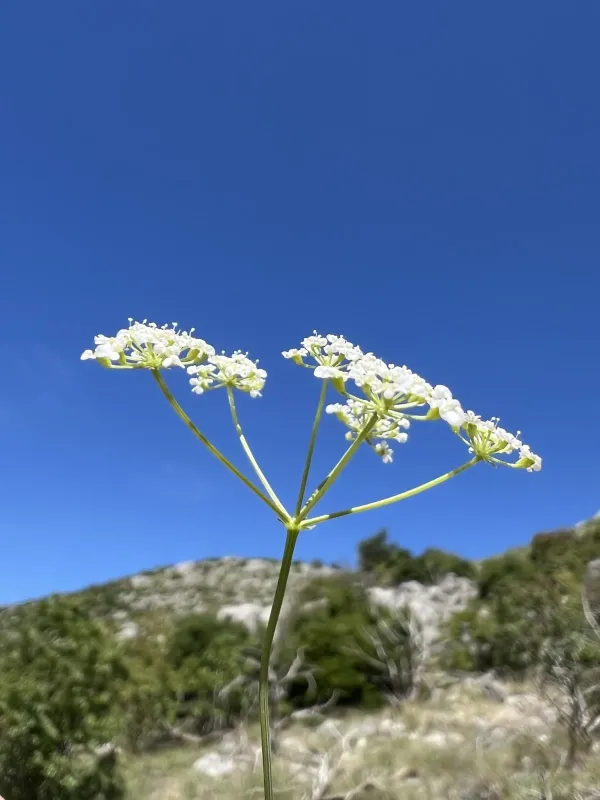
Description
Sowing dates
Bunium ferulaceum is a herbaceous perennial plant belonging to the Apiaceae family. In the wild, it grows in regions of Central Asia, the Caucasus, and Iran, preferring mountain slopes and foothills with moderate moisture levels.
The sowing time usually falls in early spring, as soon as the soil warms up to 6–8 degrees Celsius. Winter sowing is also permitted in regions with mild winters to ensure earlier germination in the following season.
The planting depth is 2–3 centimeters, and it is crucial to ensure good contact between the seed and the soil for uniform emergence. Planting too deep can significantly delay sprouting due to the plant's slow germination rate.
An optimal planting scheme involves row spacing of 45 to 60 centimeters, which facilitates mechanized weeding and maintenance. The plant develops quite slowly during its first year, forming only a basal rosette of leaves.
To accelerate germination, it is recommended to perform pre-sowing treatment, including stratification or soaking seeds in growth stimulants. This reduces the time between planting and the emergence of the first true leaves.
Growing requirements
The crop has moderate climate requirements, preferring areas with distinct seasonality and no waterlogging during dormancy. Good light exposure throughout the entire growing season is a key factor for successful cultivation.
Soils for cultivation should be light, sandy, or loamy with a neutral or slightly alkaline pH. Water stagnation is detrimental to the bunium root system, making areas with high groundwater levels unsuitable for planting.
The plant possesses a developed tuberous root that serves as a nutrient storage organ, allowing it to withstand temporary droughts. However, during the period of active vegetative growth, it is necessary to maintain stable soil moisture.
For high-quality development, bunium requires phosphorus-potassium fertilizers, which stimulate the formation of reproductive organs. Excessive nitrogen application may lead to excessive leaf growth at the expense of root development.
Regular inter-row cultivation is important to prevent soil crusting, which hinders root gas exchange. Mulching the area with organic materials helps retain moisture and reduces weed pressure.
Yield
The economic use of Bunium ferulaceum focuses on obtaining seeds, which have a distinct aroma and are used in cooking as a spice, similar to caraway or cumin. The plant's roots are also valued and can be consumed boiled or fried.
Crop productivity depends directly on climatic conditions and adherence to agronomic practices. Under favorable conditions, seed yield is significant, and given the high content of essential oils, the crop is economically attractive.
A crucial aspect is the accumulation of essential oils, which peaks at the stage of full biological maturity of the seeds. Yield is measured in kilograms per hectare, with market quality determined by spice industry standards.
Harvesting is a labor-intensive process requiring precision, as seeds are prone to shattering when overripe. Modern agricultural technology uses specialized combines calibrated to minimize damage to the plant material.
After harvesting, seeds are cleaned and dried naturally or artificially to a moisture content of 10–12 percent. Proper storage ensures product quality for several years without the loss of essential oils.
Main diseases and pests
Typical diseases for bunium include fungal infections such as powdery mildew and various types of root rot. Prevention relies on proper crop rotation and avoiding dense planting.
Pests that threaten the crop include insects affecting umbelliferous plants, such as aphids, parsley webworms, and weevils. Both biological control methods and approved insecticides can be used during the growing season.
Nematodes can affect the tuberous roots, so phytosanitary soil inspection is essential before planting. Infested plots require a long break of up to 3–4 years before planting any umbelliferous crops again.
Bacterial infections can occur under conditions of high air humidity and poor ventilation of the fields. The most effective control method is the timely removal of infected plants from the plot.
Controlling weed purity is critical, as weeds can act as intermediate hosts for diseases and pests. A clean field significantly reduces the risks of mass infection outbreaks.
Harvesting
Bunium seed harvesting is performed in dry weather when umbels turn brown and seeds become hard and dark. It is vital not to miss the mass shattering stage, requiring daily monitoring of the field.
The cut umbels are dried in ventilated sheds to allow seeds to dry naturally. Threshing is then performed, followed by cleaning and grading the commercial product.
Bunium roots are harvested at the end of the growing season when the aerial part of the plant begins to die back. During this time, the roots are maximally filled with nutrients and have the best taste profile.
After digging, the roots are cleaned of soil, washed, and dried at low temperatures if processing is intended. It is important to avoid damaging the root skin to ensure a longer shelf life for the product.
For long-term storage, seeds are packed in airtight containers to prevent aroma loss. Storing in dark, dry warehouses allows the preservation of all biologically active spice components for an extended period.