
Upriver orange mangrove
Bruguiera sexangula
Description
Growing requirements
The Upriver orange mangrove (Bruguiera sexangula) is a member of the Rhizophoraceae family. This evergreen tree is a prominent inhabitant of tropical mangrove forests, specifically favoring areas that are regularly inundated by tidal waters.
The species requires a unique set of environmental conditions, primarily soft, muddy substrates within the intertidal zone. Its survival is intrinsically linked to the salinity levels and tidal rhythms of the coastal ecosystem.
Botanically, the plant is distinguished by its specialized root system, featuring knee-like pneumatophores. These structures emerge from the mud to facilitate gas exchange, as the surrounding soil is typically anaerobic and waterlogged.
The leaves are leathery, elliptic, and deep green, adaptations designed to regulate water balance in high-salt environments. The tree flourishes in areas with sufficient solar radiation, where it can compete effectively with other mangrove species.
The soil profile in these mangroves is unique, consisting of fine silts and organic deposits. The trees act as a natural barrier, protecting coastlines from erosion and storm surges, thereby maintaining the stability of the aquatic environment.
Harvesting
The timber of Bruguiera sexangula is highly valued for its density and durability. It is traditionally used in construction for structural elements, poles, and piling that require prolonged exposure to water, as it is resistant to decay.
The bark of the tree is a rich source of tannins. Historically, these extracts were utilized extensively in the leather tanning industry, providing a natural and sustainable alternative to synthetic chemical agents.
In various coastal communities, the dense wood is harvested for fuel. It is favored for its high calorific value, providing a consistent and long-lasting heat source for household needs and small-scale artisanal production.
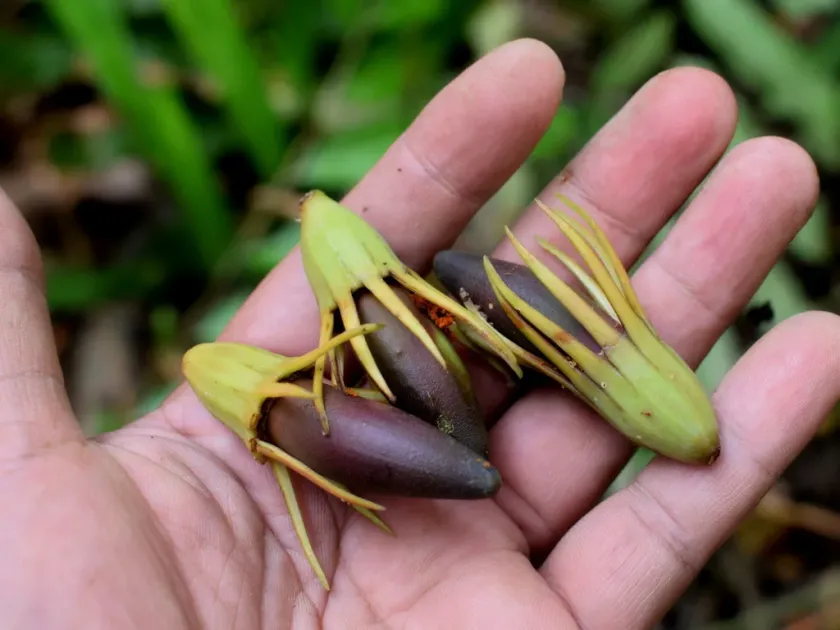
The species reproduces through vivipary, where seeds germinate while still attached to the parent tree. These propagules eventually detach and fall into the mud, where they rapidly anchor themselves and begin to grow.
Due to the ecological importance of mangrove forests, modern harvesting practices are tightly regulated. Efforts are now focused on sustainable management and the restoration of degraded mangrove habitats to ensure future survival of the population.