
Bruguiera gymnorhiza
Bruguiera gymnorhiza
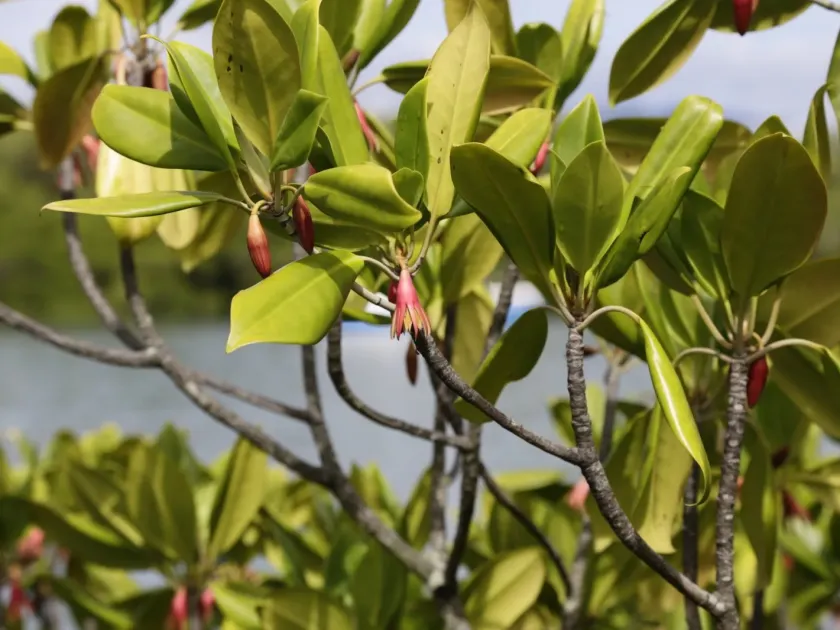
Description
Growing requirements
Bruguiera gymnorhiza belongs to the family Rhizophoraceae. It is a quintessential representative of mangrove forests, thriving in the intertidal zones of tropical and subtropical regions across the globe.
The plant prefers silty, organic-rich soils capable of withstanding regular tidal inundation. It features unique knee-shaped pneumatophores (breathing roots) that allow the tree to obtain oxygen in the anaerobic conditions of the coastal sediment.
For healthy growth, Bruguiera requires a hot, humid climate. It is extremely sensitive to frost, which is why its natural range is strictly confined to the tropical latitudes of the Indian and Pacific Oceans.
The species requires protection from intense wave action, preferring calm estuaries and protected lagoons. Optimal development occurs with a regular influx of freshwater, which balances the salinity of the substrate.
Cultivation strategies involve the use of sprouted hypocotyls, which are planted directly into the substrate shortly after detaching from the parent tree, ensuring high survival rates in the challenging tidal environment.
Main diseases and pests
The primary threats to Bruguiera populations include altered hydrological regimes and dam construction. These activities disrupt the natural flow of nutrients and alter the salinity levels required for plant health.
Pests, such as wood-boring insects and certain species of crabs, can cause significant damage to young seedlings, severely limiting natural regeneration rates in many mangrove areas.
Fungal pathogens thriving in stagnant water conditions—often caused by poor drainage—can trigger root necrosis and cause the dieback of entire sections of the forest stand.
Pollution from petroleum products remains a catastrophic factor, as toxic compounds clog the lenticels on the roots, effectively suffocating the tree and leading to widespread mortality.
Climate change and sea-level rise present a long-term threat, particularly if the rate of sea-level increase outpaces the plant's ability to adapt and migrate landward.
Harvesting
The economic use of Bruguiera primarily centers on the harvesting of its dense, durable timber. It is frequently utilized in local construction, as support posts for structures, and for the production of high-quality charcoal.
The bark of the plant is rich in tannins, historically making it a valuable resource for the leather tanning industry. In many coastal communities, controlled harvesting is practiced to support local livelihoods while maintaining forest integrity.
The collection of fruits and the use of biomass for medicinal purposes rely on indigenous traditional knowledge. Despite its utility, uncontrolled exploitation of mangroves leads to severe coastal degradation.
On an industrial scale, harvest is strictly regulated by environmental authorities, as mangroves serve as critical natural barriers against shoreline erosion and extreme weather events like tsunamis.
Modern management focuses on selective logging, which allows young saplings to colonize gaps in the canopy, thereby preserving the structural stability and biodiversity of the mangrove forest.