
Bruguiera parviflora
Bruguiera parviflora
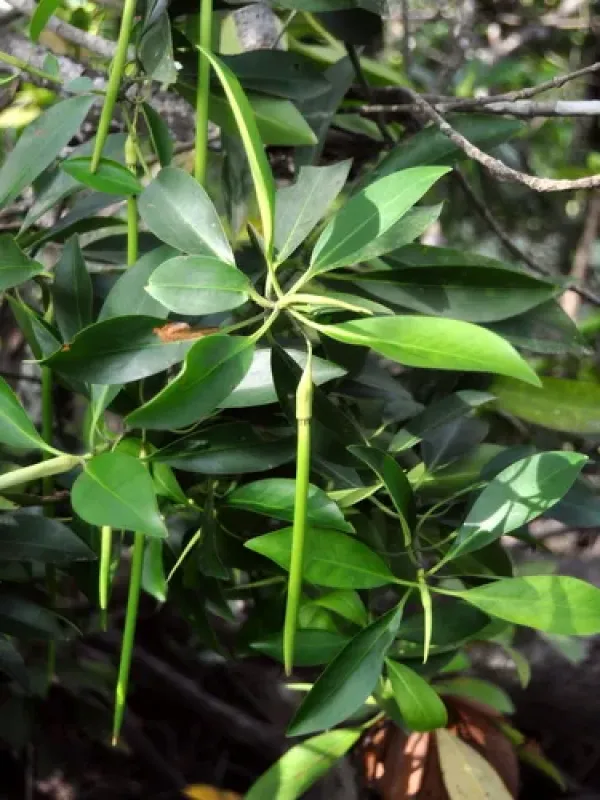
Description
Growing requirements
Bruguiera parviflora is a significant tree species within the Rhizophoraceae family, primarily native to the intertidal zones of the Indo-Pacific region. As a specialized mangrove species, it is physiologically adapted to thrive in high-salinity aquatic environments where common crops would fail.
The plant is categorized as a true halophyte, possessing unique filtration mechanisms in its roots that exclude salts from seawater while absorbing vital water. Its morphological structure includes distinct knee-like pneumatophores, which allow the plant to breathe during periodic tidal inundation in anaerobic mudflats.
Environmental requirements for Bruguiera parviflora center on tropical maritime climates characterized by consistent thermal levels and regular tidal flooding. The plant requires fine-textured, nutrient-rich sediments to establish its complex root network, which serves as a foundation for its overall development.
Agronomic management of this species is largely focused on restoration ecology and sustainable coastal development. Proper planting requires careful monitoring of tidal height and soil substrate composition to ensure seedling survival during the sensitive establishment phase in coastal ecosystems.
Economically, Bruguiera parviflora is valued for its hard and durable timber, which is extensively utilized in local construction and as a high-quality fuel source. Furthermore, it is an essential species for biodiversity conservation, providing nursery habitats for numerous marine species and stabilizing shorelines against erosion.