
Red angel's trumpet
Brugmansia sanguinea
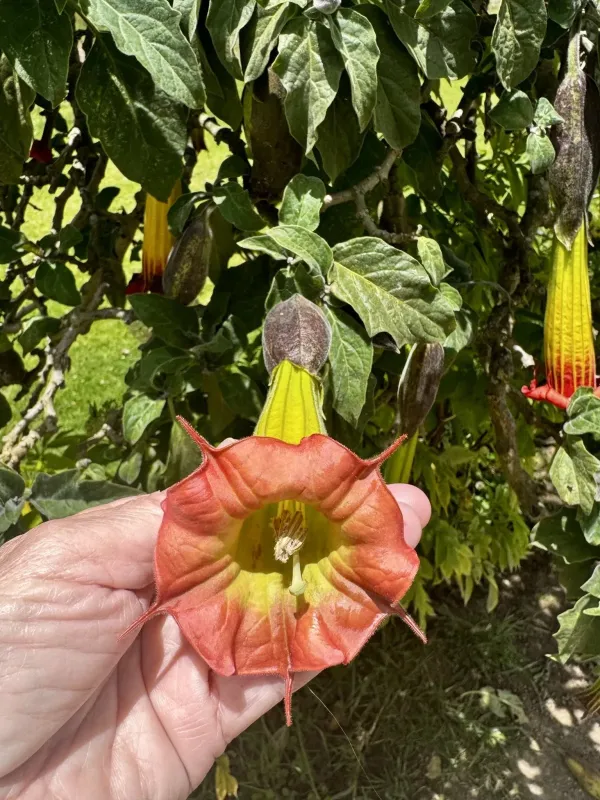
Description
Sowing dates
The Red angel's trumpet (Brugmansia sanguinea) is a prominent member of the Solanaceae family. Propagation is primarily achieved through seeds or stem cuttings during the early spring season.
When starting from seeds, it is recommended to sow them in high-quality, sterile germination mix. The process requires steady heat between +22°C and +25°C to ensure uniform germination.
Once the seedlings reach a stable stage, they must be transplanted into larger pots to support their rapid growth rate. Adequate space is essential for healthy root development.
Stem cuttings are widely used for propagation as they ensure the preservation of specific phenotypic traits. Cuttings should be taken from healthy, non-flowering shoots to maximize success.
Before moving the plants outdoors, they must undergo a hardening-off process. This stage is crucial to prevent physiological shock caused by abrupt changes in temperature and light intensity.
Growing requirements
This species thrives in locations with partial shade to full sun, provided the soil remains moist. Protection from harsh, drying winds is necessary to maintain the integrity of the foliage.
The soil must be rich in organic matter and possess excellent drainage capabilities. Regular fertilization with a balanced, high-potassium formula is vital during the vegetative stage.
The water requirements are significant, especially during hot summer days. The plant acts as an indicator; if the soil dries out completely, the large leaves will quickly wilt.
Unlike other Brugmansia species, Brugmansia sanguinea originates from high-altitude regions of the Andes, which makes it more tolerant of cooler, temperate climates.
Winter maintenance requires moving the plant indoors before the first frost. A cool, bright location with a temperature range of +5°C to +10°C is ideal for its dormancy period.
Main diseases and pests
Spider mites are the most persistent pest for this crop, particularly in low-humidity environments. Regular misting and pest monitoring are key components of a successful strategy.
Whiteflies can also cause significant damage by feeding on sap and excreting honeydew, which promotes the growth of sooty mold. Proper sanitation and systemic insecticides are recommended.
Root rot, often caused by overwatering or poor drainage, is a critical threat to container-grown plants. Ensuring adequate porosity in the growing medium is the primary preventive measure.
Fungal leaf spots may occur if the foliage remains wet for extended periods in low light. Good airflow around the plants helps to mitigate the risk of these infections.
It is important to remember that all parts of the plant are poisonous if ingested. Growers should handle the plant with care, preferably using gloves during pruning and maintenance.