
Rose of Venezuela
Brownea grandiceps
Description
Growing requirements
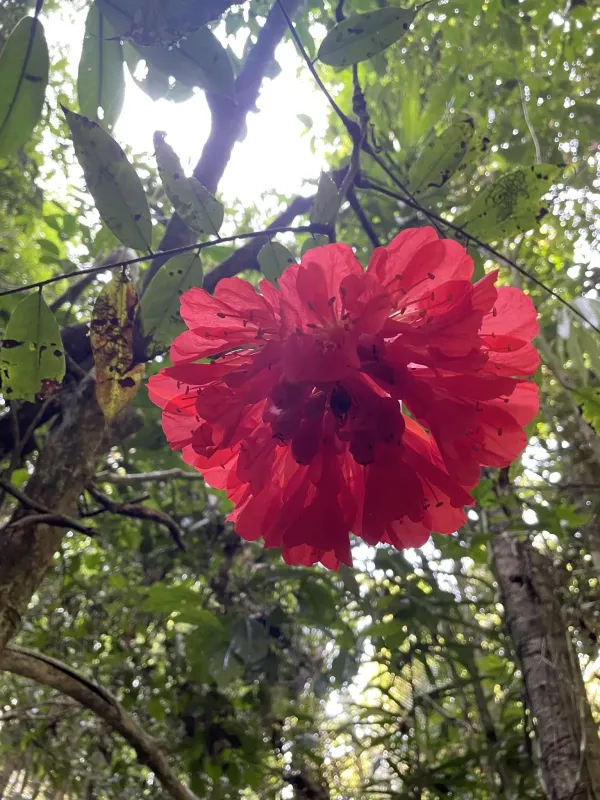
Rose of Venezuela (Brownea grandiceps) is a member of the Fabaceae family, known for its breathtaking, large, scarlet-red globular inflorescences. This evergreen plant acts as a majestic small tree or shrub, highly prized for its unique foliage and floral display.
Native to the rainforests of South America, specifically Colombia and Venezuela, this species thrives in high humidity and warm, stable temperatures. It requires a sheltered environment that replicates the shaded conditions of the tropical forest understory, away from direct, scorching sun.
Cultivation requires fertile, well-draining soil with a slightly acidic to neutral pH level. Proper drainage is essential to prevent waterlogging, which the plant's root system is extremely sensitive to. In a container setting, a porous mix including peat and perlite is often recommended.
The agronomy of Brownea grandiceps focuses on constant environmental control. Growers must maintain air temperatures between 20°C and 28°C and provide high ambient humidity. Monthly fertilization during the growing season helps support the energy-intensive process of producing its large flower heads.
Host usage is primarily ornamental and botanical. It is an iconic specimen for tropical conservatories and botanical gardens. Its ability to bloom repeatedly makes it a focal point for displays, attracting attention through its intricate, petal-rich flower arrangements.
Main diseases and pests
Typical pests affecting this species in sheltered environments include spider mites, mealybugs, and scale insects, which often thrive when humidity levels are not consistently maintained at high levels.
Pathogenic threats are dominated by root rot caused by poor soil aeration and water management. Leaf spot diseases may also occur if the foliage remains wet for extended periods in environments with poor air circulation.