
Breynia fruticosa
Breynia fruticosa
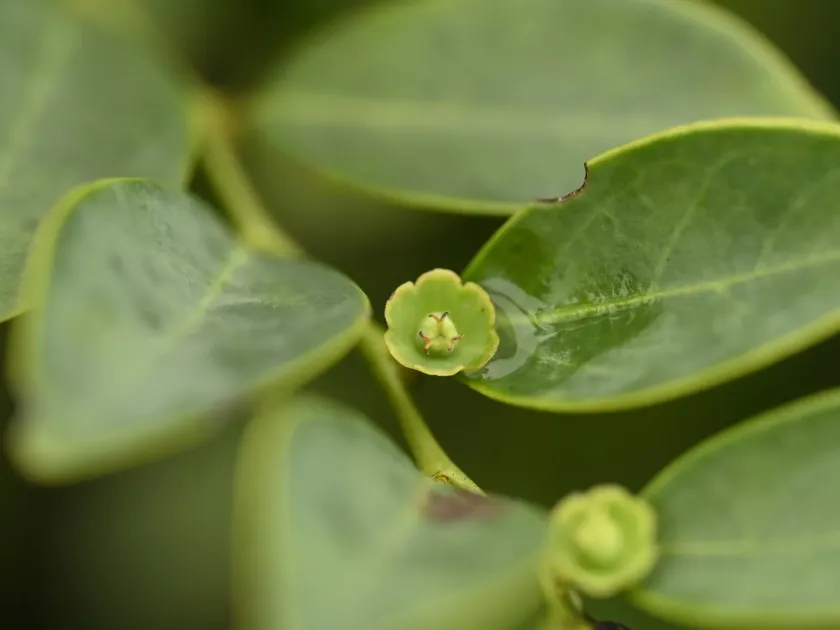
Description
Sowing dates
Breynia fruticosa is a perennial plant primarily propagated through seeds or stem cuttings, depending on the specific agricultural objectives and climate zones.
For seed sowing, it is essential to prepare a fertile and well-drained substrate, ideally conducted during the onset of the humid season to ensure rapid germination.
Cuttings are often preferred in professional farming settings to ensure genetic uniformity and to reduce the time required for the plant to reach maturity.
The moisture content of the soil must be kept consistent, as the seeds or cuttings of this species are highly sensitive to drought during the initial development phase.
Young plants should be kept in a nursery environment with controlled temperatures until they establish a strong root system, ensuring better survival upon transplanting.
Growing requirements
Belonging to the Phyllanthaceae family, Breynia fruticosa thrives in tropical environments where high humidity and warm temperatures persist throughout the year.
The ideal soil profile for this crop is a loamy or sandy-loam texture that is rich in organic matter and maintains a slightly acidic to neutral pH level.
Agricultural management requires regular irrigation and nutrient application, focusing on nitrogen-rich fertilizers to support the production of dense foliage.
Protection from extreme wind and direct scorching sun is necessary, as the plant prefers bright, filtered light to prevent damage to its delicate leaf structure.
Proper plant spacing is vital to ensure adequate air circulation, which significantly reduces the risk of humidity-related pathogens in dense plantation layouts.
Main diseases and pests
The crop is occasionally susceptible to infestations by scale insects and mealybugs, which tend to congregate on the undersides of the leaves and along the stems.
Fungal diseases, such as leaf spot or root rot, are common threats, especially in poorly ventilated environments with stagnant air and high ambient humidity levels.
Integrated Pest Management (IPM) practices, including the use of neem-based oils or biological controls, are highly recommended to keep the harvest organic and safe.
Regular monitoring of the plantation is essential to detect pest activity early, allowing for targeted treatments rather than full-field chemical applications.
Maintaining a clean agricultural environment and removing any infected plant debris helps to curb the spread of pathogens across the growing area.
Harvesting
The harvesting process involves selective picking of mature leaves and young stems, which are valuable for their secondary metabolites and herbal properties.
Optimal harvest timing is usually early in the morning when the concentration of essential compounds within the plant tissues is at its peak diurnal level.
Immediate post-harvest processing is crucial, requiring rapid transport to a drying facility to prevent degradation or microbial growth caused by lingering moisture.
The drying phase should occur in a dark, well-ventilated space with precise temperature control to preserve the chemical integrity of the harvested material.
Final storage requires airtight, moisture-resistant packaging to maintain the quality of the product over long periods before distribution or industrial extraction.