
Bracken
Pteridium aquilinum (L.) Kuhn
Description
Sowing dates
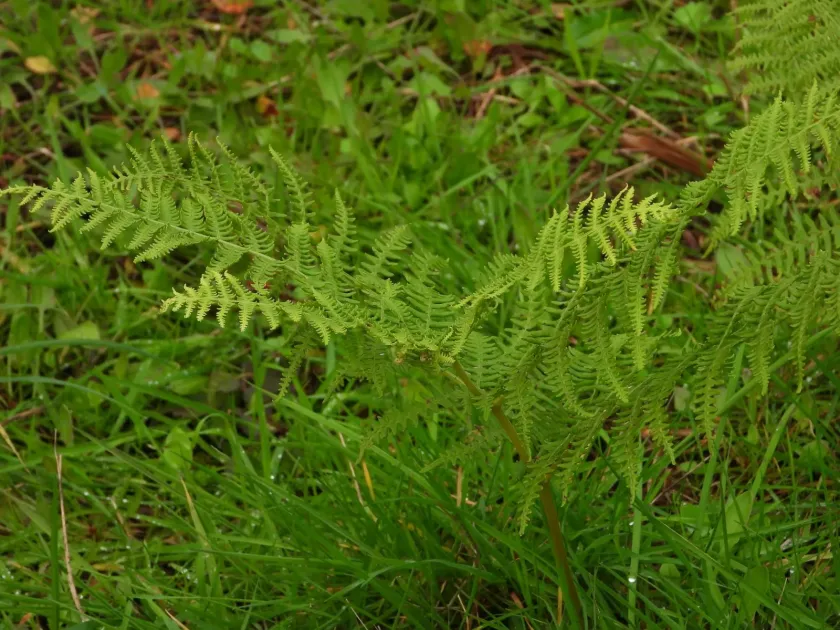
Bracken, scientifically known as Pteridium aquilinum, is a resilient perennial fern belonging to the Dennstaedtiaceae family. In agricultural practices, it is primarily propagated vegetatively by dividing and transplanting vigorous rhizomes.
The ideal time for planting is early spring or early autumn, allowing the root systems to establish themselves during periods of mild temperature and sufficient moisture availability.
Rhizomes should be planted at a depth of 10–15 centimeters, ensuring that the growth buds are facing upward to promote rapid shoot emergence from the soil surface.
When establishing a plantation, row spacing of 60 to 80 centimeters is recommended, with a planting distance of 30–40 centimeters between individual plants to encourage optimal spreading.
Success starts with choosing a site free from invasive perennial weeds, as young ferns can struggle to compete against established deep-rooted grasses during their first season.
Growing requirements
Bracken thrives in well-drained, slightly acidic sandy or loamy soils. It is highly sensitive to waterlogged conditions, which can lead to rapid rhizome decay and fungal outbreaks.
While the plant is hardy and can adapt to various light conditions, it performs best in locations that offer partial shade, particularly in regions where summer sun intensity can scorch the tender young fronds.
Adequate moisture is crucial for the development of edible shoots. During dry periods, supplemental irrigation is necessary to keep the soil consistently moist but never water-saturated.
The species is remarkably frost-tolerant, dormant during winter, and capable of surviving extreme cold, provided the rhizomes are protected by a layer of soil or organic mulch.
For sustainable commercial production, annual application of organic matter or a balanced fertilizer can improve soil structure and increase the yield of high-quality fronds.
Yield
The yield of bracken is measured by the number of tender, curled shoots (often called fiddleheads or croziers) produced per unit area. Mature stands, if properly managed, provide reliable annual harvests.
The harvest window is very short, lasting approximately 10 to 14 days. Shoots must be collected while they are still in the tightly coiled stage before the leaves begin to unfold.
Regular harvesting of the young shoots encourages the plant to produce more stalks throughout the early season, though care must be taken not to over-harvest and deplete the rhizome's energy reserves.
In optimal conditions, a well-established stand can remain productive for over a decade, provided that no severe drought or disease pressure damages the underground network.
Efficiency in yield is heavily dependent on the labor-intensive hand-harvesting process, which ensures that only the highest quality product is selected for the market.
Main diseases and pests
Bracken is generally resistant to many common pests, but it can be susceptible to rust fungi and powdery mildew, particularly in environments with poor air circulation.
Slugs and snails are the most significant threats to young shoots. Their feeding damage can render the crop unsellable, necessitating the use of perimeter barriers or organic deterrents.
Root rot caused by Phytophthora or other soil-borne pathogens can occur if the field is poorly drained, which is often the most difficult issue to rectify in an established plantation.
Integrated pest management (IPM) is essential. Because the product is intended for human consumption, chemical pesticide use must be kept to a absolute minimum or avoided entirely.
Maintaining clear inter-row spaces and removing dead frond material at the end of the season helps reduce the prevalence of pathogens that overwinter in plant debris.
Harvesting
Harvesting is performed by snapping or cutting the stem at the base, usually just above the ground, while the shoot is still tender and brittle enough to break easily.
Post-harvest handling is critical; shoots must be shielded from direct sunlight and kept cool to prevent the rapid oxidation and darkening that reduces market quality.
Transportation should be conducted in ventilated containers to prevent moisture buildup and heat accumulation, which could cause the fiddleheads to wilt and degrade rapidly.
For culinary use, immediate processing is required. This involves cleaning and boiling the shoots in salted water to neutralize any naturally occurring compounds and improve texture.
Following the harvest, the plantation area should be gently cultivated or mulched to protect the rhizomes, ensuring they are well-prepared for the next growing season.